La FDA confirme que l'ADN issu de la thérapie génique s'est intégré dans le génome humain, provoquant ainsi un cancer

Focal Points, 7 novembre 2026
The FDA has confirmed insertional oncogenesis involving a viral-vector gene therapy that uses the same category of DNA-delivery technology as Johnson & Johnson and AstraZeneca COVID shots.
***
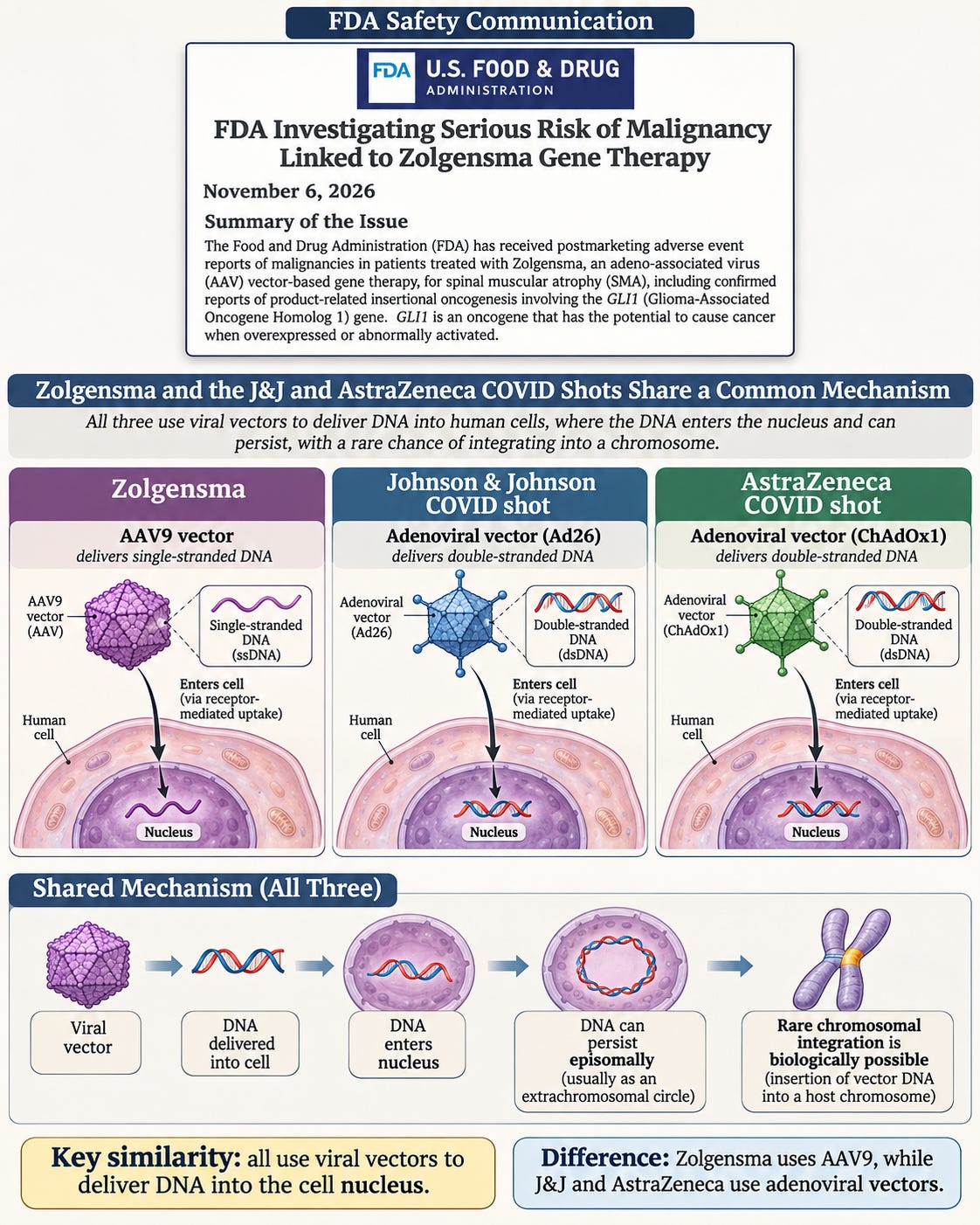
In a major safety announcement issued November 6, 2026, the FDA revealed that DNA delivered by Zolgensma had integrated into patients’ chromosomes in two tumor cases, involving the cancer-associated GLI1 oncogene. The agency explicitly described these findings as “confirmed reports of product-related insertional oncogenesis.”
Concerningly, Johnson & Johnson and AstraZeneca COVID shots use the same broad category of DNA-delivery technology as Zolgensma.
Zolgensma is a gene therapy designed to treat spinal muscular atrophy (SMA). It uses an adeno-associated virus (AAV9) vector to deliver DNA into human cells.
The FDA identified several concerning findings:
- Nine tumors have been reported among patients previously treated with Zolgensma, according to manufacturer Novartis.
- Two tumor cases demonstrated integration of Zolgensma vector DNA into the patients’ genomes.
- The integrated DNA contained a promoter inserted upstream of or within the GLI1 oncogene, potentially disrupting normal gene regulation.
The Connection to Johnson & Johnson and AstraZeneca COVID-19 Vaccines
.
.
Both Zolgensma and the Johnson & Johnson and AstraZeneca COVID-19 vaccines use engineered viral vectors to deliver DNA into human cell nuclei.
The principal difference is the specific viral vector employed:
Zolgensma: Uses an adeno-associated virus (AAV9) vector carrying DNA that forms a double-stranded template inside cells.
Johnson & Johnson: Uses a replication-incompetent human adenovirus type 26 (Ad26) vector to deliver double-stranded DNA encoding the SARS-CoV-2 spike protein.
AstraZeneca: Uses a replication-incompetent chimpanzee adenoviral vector (ChAdOx1) to deliver double-stranded DNA encoding the SARS-CoV-2 spike protein.
All three technologies deliver foreign genetic material to the nucleus, where it can be transcribed into messenger RNA and subsequently translated into protein.
Although the vectors differ, both AAV and adenoviral vectors have demonstrated the capacity for chromosomal integration under certain experimental conditions.
The central finding is clear: a viral-vector gene therapy designed to deliver DNA without chromosomal integration has now been associated with confirmed insertional oncogenesis in human patients.
It appears it’s not just mRNA shots that can integrate into chromosomes, which we have previously shown:
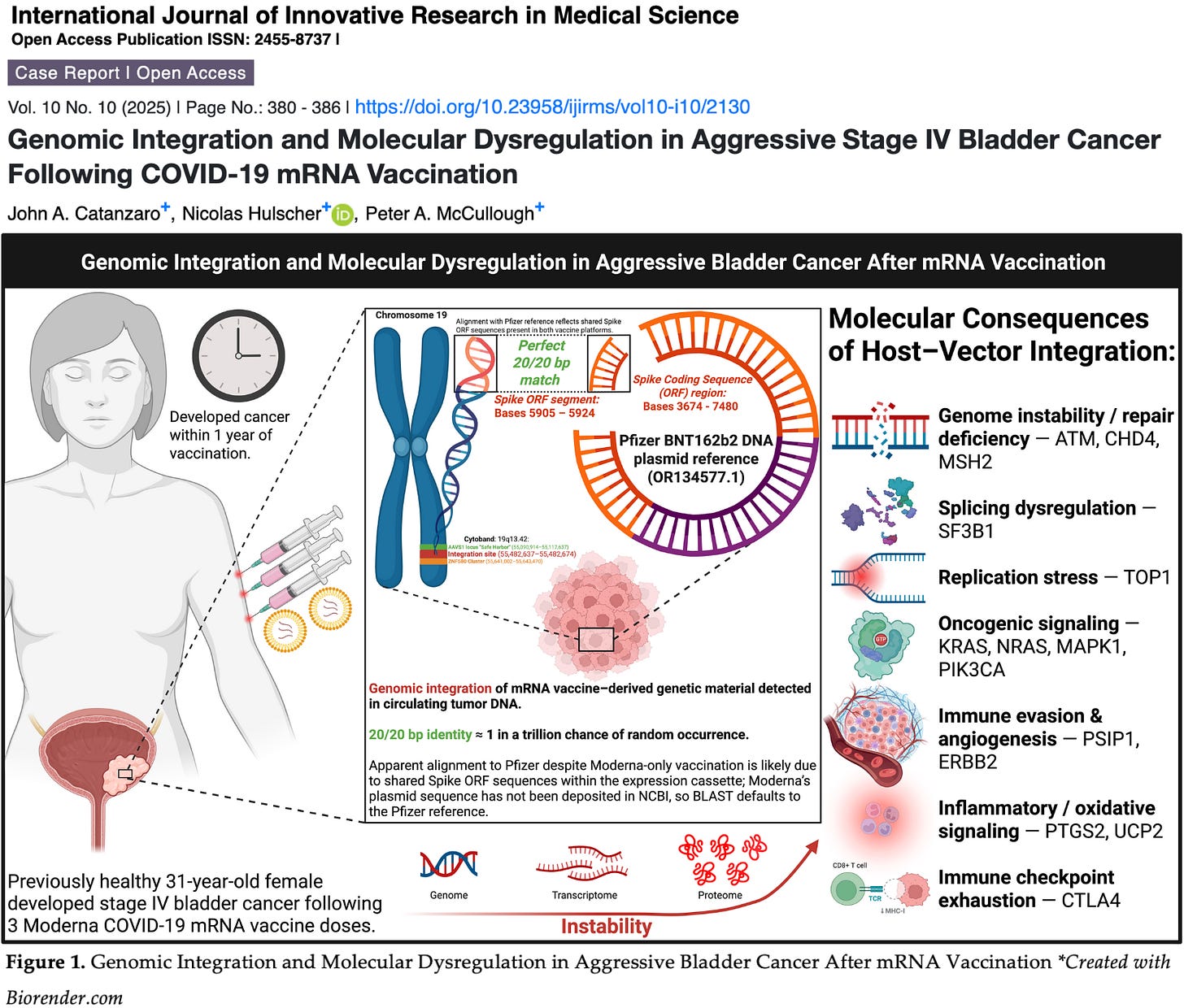
This raises serious implications for viral-vector “vaccines.” It’s also surprising that the FDA performed its duty by announcing a risk of cancer associated with a genetic product. If only they applied the same level of scrutiny to the mass-administered COVID shots.
Nicolas Hulscher, MPH, Epidemiologist and Foundation Administrator, McCullough Foundation
Featured image source

2ème illustration


Commentaires
Enregistrer un commentaire