Les données ne soutiennent pas l’accusation qui affirme : l’Iran et le « premier sponsor du terrorisme »
Larry C Johnson 18 août 2026

(NOTE: I decided to try to synthesize the various articles I have written debunking the claims that Iran, Hamas and Hezbollah are the primary sources of terrorism. I hope you find this useful and can share it with friends who have been bamboozled by the conventional wisdom.)
Every administration reaches for the same line. Iran, we are told, is the world’s foremost state sponsor of terrorism — a claim now central to the case for war. It carries the weight of an official designation: Iran has sat on the State Department’s list of state sponsors of terrorism since January 19, 1984, the longest-running designation currently on the books, alongside Cuba, North Korea, and Syria. The supporting figures get repeated as settled fact — more than a billion dollars a year in terror financing, and somewhere between 140,000 and 185,000 IRGC-Quds Force partner fighters spread across Afghanistan, Gaza, Lebanon, Pakistan, Syria, and Yemen.
The problem is that the government’s own record doesn’t back the headline. The place to test the claim is the data the State Department itself publishes — the statistical annex to Country Reports on Terrorism, and before it Patterns of Global Terrorism, the congressionally mandated series that has catalogued international terrorist incidents year by year since 1990. When you actually read those tables, a different picture emerges from the one sold on cable news.
Who commits the attacks
The annex doesn’t sort attacks by sect, but it doesn’t need to. The identity of the top perpetrator groups tells the story on its own. Year after year across 2004–2023, the most active and lethal groups are Sunni: the Taliban, ISIS, Boko Haram, al-Qaeda and its affiliates, al-Shabaab, the TTP. On the order of nine in ten attacks in the reporting trace back to Sunni extremist actors operating out of the Salafi-jihadist tradition. None of them answer to Tehran. Most regard Shia Muslims — Iran very much included — as heretics, and target them accordingly. ISIS has spent years at open war with Iran and its allies.
A separate French dataset, compiled by FONDAPOL over a longer 1979–April 2024 window, lands in the same place. The five deadliest Islamist groups over that period account for better than 80 percent of all victims of Islamist terrorism — and every one of the five is Sunni: the Taliban, ISIS, Boko Haram, al-Shabaab, and al-Qaeda.
Where are the Iran-linked groups in all this? Largely absent from the top of the tables. Hezbollah and the Iran-aligned militias tend not to appear, in part because their operations are directed mainly at military forces rather than civilians, which places them outside the working definition of terrorism the reports use. The Houthis are the main Shia-linked group to surface in recent editions, and only as a small share of the total.
It is only in 2023 that three groups in Iran’s orbit — the Houthis, Hamas, and Hezbollah — break into the top ten at all. They do so because of their attacks on Israel, and those attacks were aimed primarily at military targets. Before 2023, neither Hamas nor Hezbollah ranked among the groups responsible for the most attacks worldwide. That is a remarkable fact for two organizations routinely described as among the planet’s most prolific terrorists.
The Israeli numbers
Take the definition of terrorism that Benjamin Netanyahu himself uses — violence against civilians for political ends — and apply it to Israel’s own government data, drawn from the Israeli Foreign Ministry’s record of victims of Palestinian violence covering 2000 through April 2024. (That dataset predates and excludes the October 7, 2023 attack.)
Two things stand out. First, Palestinian attacks have trended downward since 2003. The peak sits in the 2000–2005 window — the Second Intifada. Across the full 24 years, 1,552 Israelis were killed and 5,595 wounded, and the violence is heavily concentrated in that early-2000s spike: roughly 76 percent of the deaths and 92 percent of the wounded fall within the Second Intifada years. Second, Hamas is not the terrorist engine the public imagination makes it out to be. Only about 15 percent of attacks over the 24-year span are attributed to Hamas, acting alone or with another faction. None of this makes Hamas a peace movement — it isn’t — but it is not an organization waging ceaseless slaughter either.
The rocket fire is the clearest case of rhetoric outrunning arithmetic. Hamas and Hezbollah have launched thousands of rockets at Israel over 25 years. The death toll specifically from those rockets across 2001–2025 is on the order of 50 to 75 people — not the “thousands” the coverage implies. The gap between the two numbers is the whole point.
Set against this is the asymmetry no honest accounting can skip. Israel killed an estimated 11,200–11,500 Palestinians between 2000 and October 6, 2023. Since October 7, the figure in Gaza has climbed past 73,000 by the Gaza Health Ministry’s count — a number an Israeli military official effectively conceded in January 2026, accepting more than 71,000 killed by direct Israeli fire.
Who actually funds the perpetrators
If the metric is real, it points somewhere other than Tehran. The Sunni groups that dominate the casualty tables have drawn financial support from the Gulf Arab states — and, more awkwardly, from the United States itself. The paper trail runs through Syria: US and allied money reaching outfits spun off from ISIS, including the al-Nusra lineage that produced Hay’at Tahrir al-Sham, whose leader Washington once had a $10 million bounty on before quietly retiring it. The same government that brands Iran the foremost sponsor of terrorism has, at various points, been a facilitator of the very groups doing the most killing.
The bottom line
The designation is doing political work, not analytical work. Iran is not, by the government’s own incident data, the major driver of global terrorism; the perpetrators overwhelmingly belong to a Sunni jihadist current that is hostile to Iran and financed from elsewhere. A serious campaign against the sponsors of terrorism would start with the Gulf states, not with Tehran. Instead, a charge the data won’t support is being used as the pretext for an unprovoked war. A country living in a glass house should think twice before throwing rocks.
Anticipated objections — and the answers
“But Hamas and Hezbollah entered the top ten in 2023, so Iran’s proxies are major terrorists.” They entered in a single year, and only because of a war with Israel in which their fire was directed mainly at military targets — soldiers, bases, the IDF in the field. The State Department’s own definition turns on violence against civilians for political ends. A spike driven by attacks on an army during an active war is not evidence of sustained civilian-directed terrorism; it’s evidence of a shooting war. For the two prior decades of the reporting, neither group cracked the list of the world’s most active perpetrators. One year inside the top ten, produced by combat with a state military, does not overturn twenty outside it.
“You’re leaning on data that excludes October 7, 2023 — the deadliest single day in the whole record.” The exclusion is stated plainly, not smuggled: the Israeli Foreign Ministry dataset runs through the period before that attack, and October 7 is the largest single event on the Israeli side of the ledger. Grant it in full. It changes the total for one day; it does not change the structure of the twenty-year record, in which Palestinian violence trends downward after 2003 and Hamas accounts for roughly 15 percent of attacks. Nor does a single mass-casualty event convert Iran into the foremost global sponsor of terrorism, when the groups filling the casualty tables every other year — ISIS, the Taliban, Boko Haram, al-Shabaab — remain Sunni, anti-Shia, and unconnected to Tehran. October 7 is a real and terrible data point. It is not the trend, and it is not the sponsorship question.
“Body counts don’t measure sponsorship — the designation is about the support a state provides, not how many its proxies kill.” This is the fairest objection, and it’s worth meeting directly rather than dodging. Concede the distinction: state sponsorship is measured by money, weapons, and training, not by proxy casualty totals. But the “foremost sponsor” claim is almost never used that narrowly in practice. It is deployed to characterize the threat — to argue that Iran is the principal engine of the terrorism Americans should fear. Measured against the actual distribution of terrorist violence, that characterization collapses: the threat is overwhelmingly Sunni jihadist. And on the sponsorship axis itself, the framework is applied selectively. The Gulf states that financed Sunni networks, and the U.S. and allied money that reached groups spun off from ISIS in Syria, never draw the “number one sponsor” label. A designation that is consistent only when it points at Iran is a political instrument, not an analytical finding.
“Calling Hezbollah’s targets ‘primarily military’ whitewashes real atrocities.” The claim is about the pattern the reporting captures, not a denial that Hezbollah has ever killed civilians — it plainly has, from the 1980s bombings to attacks abroad. The point stands at the level of the aggregate data: across the reporting period, the group’s operations register mainly against military forces, which is precisely why it sits outside the top perpetrator tables that are built on civilian-directed attacks. Acknowledging the exceptions doesn’t move the aggregate.
Sources: U.S. Department of State, Country Reports on Terrorism (statistical annex, 2004–2023) and Patterns of Global Terrorism; FONDAPOL, dataset on Islamist terrorism 1979–2024; Israeli Ministry of Foreign Affairs, victims of Palestinian violence and terrorism 2000–2024; Gaza Health Ministry casualty figures. I have synthesized this from my previously published Sonar21 essays.
I started the day with Jelena and Ryan of the Winers:
https://www.youtube.com/watch?v=yA6m2MKc-uk&t=2s
Back with my brother-in-arms, Colonel Wilkerson, on the Danny Haiphong platform:
https://www.youtube.com/watch?v=iWatSwIvcVI&t=1s
I discussed Trump’s nuclear musings with Pyotr Kurzin:
https://www.youtube.com/watch?v=idEgamiBCnM&t=1s
Mario wanted my take on Israel’s decision to bomb Turkish forces in Syria:
https://www.youtube.com/watch?v=GNq0dJy1RsE&t=2s
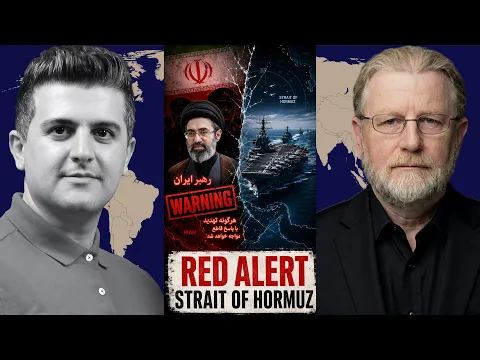
Ditto for Nima… Is Israel trying to provoke a new war with Turkey?
https://www.youtube.com/watch?v=xtLSiOSFYp4&t=1s
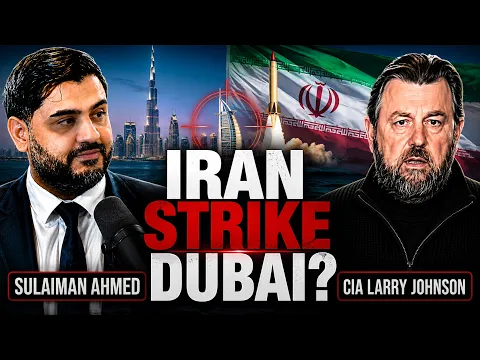
Sulaiman had the same questions as Mario and Nima:
https://www.youtube.com/watch?v=Lj-U_APJWxA&t=2s
Back with my brother-in-arms, Colonel Wilkerson, on the Danny Haiphong platform:
I discussed Trump’s nuclear musings with Pyotr Kurzin:
Mario wanted my take on Israel’s decision to bomb Turkish forces in Syria:
Ditto for Nima… Is Israel trying to provoke a new war with Turkey?
Sulaiman had the same questions as Mario and Nima:


Commentaires
Enregistrer un commentaire