Nourrir l’ennemi : comment l’obsession de Washington pour l’Iran l' a détourné de sa guerre contre le terrorisme sunnite

For a quarter century the United States has told the world, and itself, a simple story about its role in the Middle East. On September 11, 2001, it was attacked by Sunni jihadists, and it answered with a generational war against Sunni Islamic extremism — al-Qaeda first, the Islamic State later. Trillions of dollars, two invasions, a global drone and surveillance apparatus, and a lengthening list of designated terrorist organizations were all justified by that threat. This was the declared war, and it was real in its public form.
But there was a second policy running underneath it, and the two pointed in opposite directions. Driven by an overriding obsession with Iran and the specter of a “Shia crescent,” Washington repeatedly funded, armed, and shielded the very Sunni jihadist movements it claimed to be fighting — for one reason: those movements were killing Iranians and Iran’s allies. The radical Sunnis were attacking Iran the entire time, and in Washington’s calculus that was not a disqualification. It was the qualification. Every time the war on Sunni terror collided with the war on Iran, the war on Iran won. Which means the celebrated “Global War on Terror” was, at the operational level, subordinate to something the public was never asked to approve: a war on Iran waged, in part, through the terrorists. And even that was not new. The same weapon had already been turned on other American adversaries — the Soviets, then post-Soviet Russia — before the War on Terror was ever declared.
The War Washington advertised
The declared war needs no rehearsal. Osama bin Laden and al-Qaeda were the enemy; then, after 2014, the Islamic State inherited the role. American presidents of both parties vowed to defeat radical Islamic terrorism, dismantle its networks, and deny it sanctuary. The instruments were invasions, special-operations raids, drone campaigns across half a dozen countries, and the Foreign Terrorist Organization list. In this war, a Sunni jihadist who attacked American targets was hunted to the ends of the earth.
The catch — the contradiction that I want you to understand — is what happened to a Sunni jihadist whose guns were pointed the other way, at Iran.
The Redirection: choosing the Sunni side
By 2007, with Iraq disintegrating and Iran ascendant across the wreckage, the Bush administration made a choice. Seymour Hersh exposed it in The New Yorker under the name insiders themselves used: “the redirection.” To roll back predominantly Shiite Iran and its allies, the United States, working hand in glove with Saudi Arabia, began clandestinely channeling support to radical Sunni groups — some of them sympathetic to, or tied to, al-Qaeda — precisely because they were the most committed enemies of the Shia. Veterans of the Iran-Contra affair, several still in government, recognized their old playbook. The enemy of America’s enemy was, once again, on America’s payroll.
This was not loose talk. As Hersh reported the following year, and as former intelligence officers with direct knowledge can attest, President George W. Bush signed a classified presidential finding authorizing a major covert escalation against Iran — up to $400 million, approved by congressional leaders — focused on regime change and on “working with opposition groups and passing money.” The finding authorized support to Iran’s ethnic and sectarian fault lines: Ahwazi Arab and Baluchi groups and other dissident organizations. The stated goal was to destabilize Iran’s clerical leadership. The means included Sunni militants whose defining activity was killing Iranians.
Consider the contradiction in its purest form. At the very moment the United States was telling its citizens that Sunni jihadism was an existential menace requiring the suspension of ordinary liberties, its president was signing his name to a program that paid Sunni militants to wage war inside Iran.
Jundallah: a terrorist group, backed for its terrorism
No single case captures the hypocrisy better than Jundallah. A Baluchi Sunni Islamist outfit in Iran’s southeast, it carried out bombings and ambushes against the Islamic Revolutionary Guard Corps and Iranian civilians. Former CIA officer Robert Baer identified it as a beneficiary of American support; the Council on Foreign Relations’ Vali Nasr described it to Hersh as a vicious organization suspected of ties to al-Qaeda. ABC News reported it had been secretly encouraged and advised by US officials.
Read that arc slowly. Washington supported a Sunni group suspected of al-Qaeda links — the supposed archenemy of the War on Terror — because that group was murdering members of Iran’s Revolutionary Guard. Its anti-Shia violence was not something Washington reluctantly overlooked. It was the entire point. And then, in 2010, the United States formally designated Jundallah a Foreign Terrorist Organization. The same government, in the same decade, both used the group as an instrument against Iran and placed it on the list reserved for civilization’s enemies. That is not a paradox to be explained away. It is the policy, laid bare: the “terrorist” label was applied or withheld depending on which direction the killing ran.
The pattern was older than the War on Terror
The instrument was not invented for the war on Iran, or even after 9/11. It was already decades old.
The template was Afghanistan. Through Operation Cyclone in the 1980s, the CIA funneled billions of dollars through Pakistan’s intelligence service to the anti-Soviet mujahideen, with the largest shares going to the most radical commanders. That effort built the training camps, the arms pipelines, and the transnational jihadist network — the “Afghan Arabs” — from which al-Qaeda and the Taliban emerged. The honest caveat holds: American money went to Afghan factions via Pakistan, not directly to the Arab volunteers who became al-Qaeda, and bin Laden had his own financing. But the ecosystem was an American and Saudi creation, and once built it did not disband. It went looking for the next war.
It found two, both against adversaries of the United States, and both before the Twin Towers fell. In Bosnia in the 1990s, Washington and its allies facilitated the flow of arms and foreign mujahideen to the Bosnian Muslim side against the Serbs. And in Chechnya, the same jihadist infrastructure was re-aimed at post-Soviet Russia. The foreign fighters who transformed the Chechen resistance from a largely nationalist rebellion into a Salafi-jihadist campaign were led by Ibn al-Khattab — a Saudi-born veteran of the Afghan jihad — and financed through the Gulf: bin Laden’s money, and Salafist charities such as the Benevolence International Foundation, which bankrolled jihad in both Bosnia and Chechnya and which the Bush administration would shut down as a terror financier only after 9/11. It was Khattab and Shamil Basayev’s August 1999 invasion of Dagestan that triggered the Second Chechen War.
Here the record demands precision, because Chechnya is murkier than Afghanistan or Syria. The direct financing of the Chechen jihad was overwhelmingly Gulf and al-Qaeda money, not American; allegations of direct CIA payments to the fighters are not cleanly documented. What is documented is the American political scaffolding around the cause and Washington’s studied non-interference with a jihad aimed at its old Cold War rival. The American Committee for Peace in Chechnya — founded in 1999, housed at the partly government-funded Freedom House, chaired by former national security adviser Zbigniew Brzezinski and stacked with neoconservatives including Richard Perle, Elliott Abrams, Frank Gaffney, William Kristol, Robert Kagan, and James Woolsey — championed the Chechen separatist cause, by its critics’ account, as a lever to weaken Russia and pry open the resource-rich Caucasus. Washington did not need to write checks to the fighters. It had already built the network in Afghanistan, and it let that network be turned on Russia while its own foreign-policy establishment supplied the cause with legitimacy.
The bitter irony arrived on September 11, 2001. The same transnational jihadist apparatus that Washington had cultivated against the Soviets and tolerated against Russia — the same charities, the same Afghan-Arab veterans, the same Gulf financiers — turned on the United States itself. The lesson Washington might have drawn was to dismantle the instrument. Instead, within six years, in the redirection, it picked the weapon back up and aimed it at Iran. The war on Sunni terror was declared by the very establishment that had spent two decades finding uses for Sunni jihad — which is the deepest reason the contradiction was baked in from the start.
Syria: the contradiction at industrial scale
Where the Bush finding targeted Iran directly, the next administration turned the same logic on Iran’s most important Arab ally — and the contradiction reached full absurdity.
From roughly 2012, President Obama authorized Operation Timber Sycamore, described by The New York Times as one of the costliest CIA arm-and-train programs since the Afghan effort: over a billion dollars, co-funded by Saudi Arabia, to supply rebels fighting Bashar al-Assad, Iran’s linchpin partner and the corridor to Hezbollah. Investigations by the Times, the Washington Post, and Conflict Armament Research documented what followed: the weapons reached al-Nusra, al-Qaeda’s Syrian branch, and the Islamic State, through black markets, defections, and battlefield alliances. Vetting was minimal; there was no reliable way to track where the arms or the trainees ended up.
Hold the two policies side by side. In Iraq, the United States was bombing the Islamic State and calling it the gravest terrorist threat of the age. In Syria, it was pouring weapons into an insurgency in which that same Islamic State and al-Qaeda’s affiliate were the most effective fighters — because they were the ones bleeding Assad, Hezbollah, and the Iranians. The War on Terror and the war on Iran were being waged in the same theater, at the same time, against and for the same jihadists.
And Washington’s own intelligence stated the anti-Iran purpose outright. A Defense Intelligence Agency memo of August 2012, declassified through a Judicial Watch lawsuit, recorded that “the West, Gulf countries, and Turkey support the opposition” while Russia, China, and Iran backed Assad — and assessed that a “Salafist principality” might arise in eastern Syria, which was “exactly what the supporting powers to the opposition want, in order to isolate the Syrian regime.” The memo named the reason: Assad as the “strategic depth of the Shia expansion (Iraq and Iran).” A jihadist statelet — the thing the War on Terror existed to prevent — was assessed as desirable because it would wound Iran. The mask could not have slipped further.
Officials later admitted it. Vice President Biden told a Harvard audience in 2014 that America’s allies had poured hundreds of millions of dollars and vast quantities of weapons into anyone who would fight Assad, and that the recipients turned out to be al-Nusra, al-Qaeda, and foreign jihadists. A 2014 email from Hillary Clinton, released by WikiLeaks, stated that the governments of Saudi Arabia and Qatar were providing clandestine financial and logistic support to ISIL and other radical Sunni groups. These were not accidents of a chaotic war. They were the strategy behaving as designed.
When the two wars collided, Iran always lost
The contradiction was ultimately resolved, again and again, in the same direction. Wherever a Sunni jihadist movement’s violence served the anti-Iran project, the War on Terror gave way. The Islamic State was allowed to metastasize on ground where it isolated Assad and Iran, and the campaign against it acquired real urgency only once it turned to slaughtering Yazidis, beheading Americans, and threatening Baghdad. The selectivity was the message.
The definitive proof came in December 2024. A lightning offensive led by Hayat Tahrir al-Sham toppled Assad and severed Iran’s land bridge to Hezbollah — the spine of the very Shia axis the redirection had been written to break. The instrument of that victory was, once more, a Sunni jihadist organization descended directly from al-Qaeda: HTS grew out of al-Nusra, and its leader, Ahmed al-Sharaa, is the former Abu Mohammad al-Jolani, once sent to build al-Qaeda’s Syrian franchise and long carrying a $10 million American bounty. Washington’s response to the triumph of the movement it had spent two decades vowing to destroy was to embrace it. In July 2025 it revoked HTS’s terrorist designation; in November 2025 the Treasury and the UN Security Council struck al-Sharaa from their terrorism sanctions lists, and the bounty on his head vanished, days before he was received in Washington. A former al-Qaeda commander became a governing partner — because his war had finally gone the right way.
Jundallah’s arc, played out on a national scale. The declared enemy became the ally the instant it delivered against Iran.
The public War on Terror was not wholly a fiction — the United States genuinely hunted al-Qaeda, killed bin Laden, and fought the Islamic State where it threatened American interests. The charge here is not that the war was fake, but that it was selective and subordinate: consistently overridden whenever Sunni jihadist violence pointed at Iran. These were distinct covert programs under different presidents — the Bush finding against Iran in 2007–08, Obama’s Timber Sycamore against Assad from 2012 — bound by strategic continuity, not one signature. Much of the money moved indirectly, through Saudi Arabia and other intermediaries, which is both how deniability was preserved and why the blunt phrase “the U.S. funded terrorists” understates and overstates at once: Washington more often enabled, coordinated, and armed than cut direct checks. The Bush administration denied elements of Hersh’s reporting. And America’s adversaries amplify this history for their own purposes — reason for care, not dismissal, since the load-bearing evidence is American: a signed finding, a declassified Pentagon memo, a vice president’s on-record words, the government’s own delisting orders.
The contradiction is the whole point, and it did not begin with 9/11 — it long predates the war it later subverted. For a quarter century before the redirection, the same instrument had already been forged against the Soviets and turned against post-Soviet Russia and the Serbs; the establishment that declared war on Sunni terror in 2001 was the same one that had spent two decades finding uses for Sunni jihad. Then a superpower spent two more decades and trillions of dollars proclaiming a war against Sunni Islamic extremism while serving, wherever that extremism pointed at Iran, as its indispensable sponsor. It was not hypocrisy by accident but a hierarchy of obsessions, in which the fixation on Iran — and before it, Russia — quietly outranked the war it advertised. The jihadists understood the arrangement better than the American public did: they kept attacking America’s adversaries, and Washington kept looking away — or paying the bill. That is the true prehistory of the 2026 war. The target was always Tehran. The war on terror was the story told out front; the war on Iran was the one being waged, and it was willing to use the terrorists to wage it.
Sources: Seymour Hersh, “The Redirection” (The New Yorker, March 2007) and “Preparing the Battlefield” (The New Yorker, July 2008), with corroboration from NBC News, Al Jazeera, and Democracy Now! (the $400 million presidential finding, the regime-change objective, support to Baluchi and Ahwazi groups, and the strategy of funding radical Sunni groups with Saudi Arabia against Shia Iran); ABC News and NBC News citing former CIA officer Robert Baer and CFR analyst Vali Nasr (U.S. support for Jundallah and its suspected al-Qaeda links); U.S. State Department (Jundallah’s 2010 FTO designation); The New York Times, The Washington Post, and Conflict Armament Research (Operation Timber Sycamore and the diversion of weapons to al-Nusra and ISIS); the August 2012 Defense Intelligence Agency memo obtained by Judicial Watch (the “Salafist principality” assessment and the “strategic depth of the Shia expansion” language); Vice President Biden’s October 2014 Harvard remarks; the 2014 Clinton email released by WikiLeaks (Saudi and Qatari support to ISIL and other radical Sunni groups); and Al Jazeera, France 24, Reuters, and UN Security Council reporting (the July 2025 revocation of HTS’s terrorist designation and the November 2025 removal of al-Sharaa from U.S. and UN terrorism sanctions lists). Firsthand knowledge of the Bush finding is attested by former intelligence officials. On the pre-9/11 pattern: the Jamestown Foundation and Wikipedia (Ibn al-Khattab, the Arab foreign fighters, and the 1999 Dagestan invasion that triggered the Second Chechen War); the Council on Foreign Relations and U.S. State Department (the Islamic International Brigade as the primary channel for Gulf and al-Qaeda financing of the Chechen jihad, and the Benevolence International Foundation’s funding of jihad in Bosnia and Chechnya before its post-9/11 designation); and Russia Matters, SourceWatch, and RightWeb/Militarist Monitor (the American Committee for Peace in Chechnya, its Freedom House housing, and its Brzezinski-led, neoconservative membership). Distinct covert programs under different administrations are linked here by strategic continuity, not a single authorization.
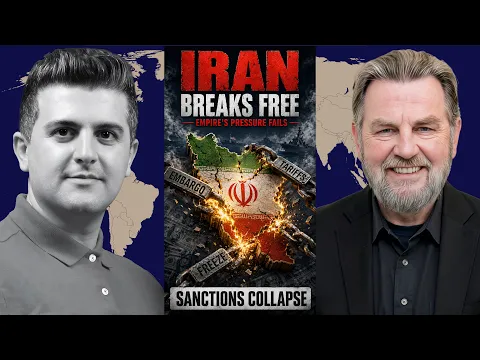
Nima and I discussed Iran’s hardening rhetoric against the United States:
https://www.youtube.com/watch?v=h2SaRdsG7F0&t=3s
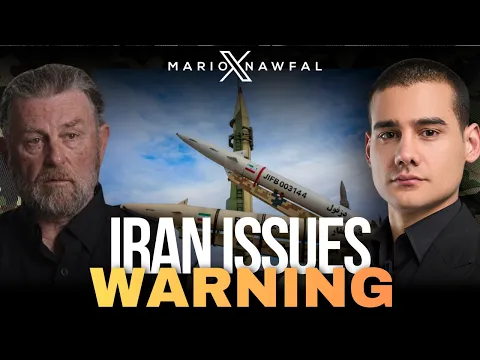
I explained to Mario that Iran will retaliate against Gulf nations that participate in the US economic war on Iran:
https://www.youtube.com/watch?v=h_W7Sj7Mi2s
I explained to Mario that Iran will retaliate against Gulf nations that participate in the US economic war on Iran:
I thank you for your invaluable support by taking time to read or comment. I do not charge a subscription fee nor do I accept advertising. I want the content to be accessible to everyone interested in the issues I am discussing. However, if you wish to make a donation, please see this link.


