Traiter les douleurs dorsales et mettre fin au pipeline de la chirurgie vertébrale (anglais) AM
https://www.midwesterndoctor.com/p/healing-back-pain-and-ending-the?

Story at a Glance:
•Modern medicine acts as a sales funnel, where patients are seen for the minimum time necessary to refer them onward to lucrative services rather than identifying the root cause of their condition.
•Since back pain has multiple causes, 90% of low back pain is simply labeled “nonspecific,” the most common causes go unrecognized and patients are placed on a standardized escalation ladder instead, where almost every rung either misses the actual cause or worsens it (e.g., all the common pain medications have serious issues).
•Some spinal surgeries are necessary or offer tangible benefits. Fusions, the most lucrative ones, have repeatedly failed to outperform non-surgical care in randomized trials while carrying a host of common and serious complications, yet have become increasingly favored — a dynamic illustrated by an extensive investigation of one hospital that generated record revenues from high-volume neurosurgery while its own physicians resigned and departed in protest over what they described as inappropriate surgeries and unsafe conditions.
•Meanwhile, countries without the wealth to sustain a medical monopoly actively explored inexpensive alternatives, and Russia and Eastern Europe built an entire literature around treating disc herniations and radiculopathies with topical DMSO, including a placebo-controlled trial and national treatment guidelines. Hundreds of readers here have independently found the same thing, including many recovering from fusions that had already failed them.
•This article will detail why each step of the conventional pathway is dangerous, the forgotten approaches my colleagues and I have relied upon for decades to resolve neck and back pain without surgery and how DMSO specifically can be used in these instances.
One of the greatest issues in healthcare, which I believe is a reflection of the society at large, is that everything has become so rushed that there is no longer time for doctors to actually connect with their patients. Because of this, a lot of the most critical parts of medicine get missed, and I have known so many patients who were harmed by the medical system because of the fifteen-minute-visit model.
When I started this newsletter, my goal was to correspond with each of the readers who reached out to me, but as this publication has grown that has become impossible. The best solution I have been able to come up with is these monthly open threads, where any question that has accumulated over the last month can be asked publicly (which is much faster for me to work through and lets everyone see the answers), paired with a topic many readers have requested.
This month’s topic is a major shortcoming of medicine that has bothered me for a very long time.
Why Back Pain Defeats Modern Medicine
Medicine, as it currently exists, serves as a sales funnel where patients are seen for the minimal amount of time necessary to refer them to (lucrative) medical services, which frequently involved perpetual symptom management and escalation to increasingly invasive therapies which are both more profitable and harmful to patients. As such, many “sales funnels” exist in medicine, and I’ve repeatedly cited this chart I made of one I find particularly egregious.
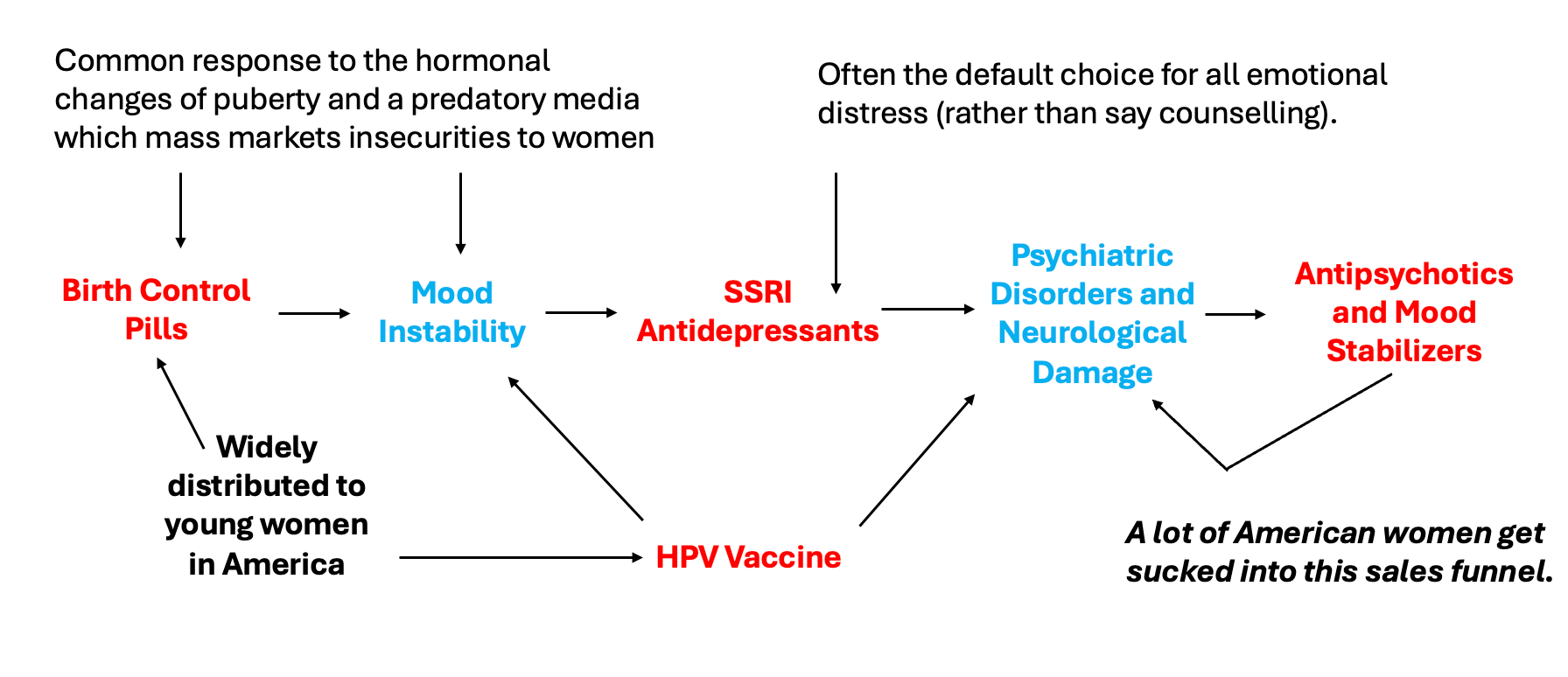
In most cases, this status quo is due to the fact visits are so short doctors (outside of private cash pay ones) do not have time to look at the broader clinical picture and identify the root cause of the patient’s condition and because the medical system is incentivized to develop products that can be perpetually sold (e.g., symptom managing drugs) rather than actual cures for common conditions.
One classic illustration of this dynamic is with pain, as temporarily alleviating pain guarantees a perpetual stream of repeat business, whereas understanding what causes it and permanently addressing the pain rapidly eliminates its customer pool. Because of this, the key drivers of back (and neck) pain remain surprisingly unrecognized by the medical field and incorrect causes (we can be managed with medical services) are frequently ascribed to them rather than the actual causes. Likewise, I’ve lost count of how many people I’ve seen who had a simple cause of back pain that was never recognized, leading to them spending years pursuing ineffective interventions.
As such, I believe it’s important to highlight the common causes of back pain:
•Tight muscles. This is by far the most common cause and the most consistently missed. Physical therapy, which would ordinarily be responsible for addressing this, tends to focus on strengthening weak muscles rather than releasing tight ones (in part because insurance reimbursements incentivize this).
•Ligamentous laxity. Ligaments are responsible for holding the bones within the body in the correct place, particularly when external strain would otherwise push them out of place (which frequently happens in settings of laxity). Once this occurs, the joints will often “grind” against each other (producing inflammation and facet joint degeneration) and irritate the surrounding structures (e.g. impinging nerves).
•Bone Misalignment:
while bones being directly out of place (which are often corrected with
manual adjustments) are recognized to cause this issue, the focus
typically is on putting them back into place rather than correcting the
underlying issue (e.g., ligamentous laxity, myofascial dysfunction or a
leg length inequality) which causes them to go out of place—which is why
many spinal adjustments do not last and need to be continually
repeated.
Note: one of the most commonly missed causes of low back pain is sacroiliac (SI) joint dysfunction
•Seronegative spondyloarthropathies are a family of inflammatory joint conditions that do not have some of the classic blood markers for rheumatologic diseases (and hence are often missed). They are characterized by inflammatory axial back pain (starting at the sacrum) that onsets before age 45, and often is accompanied by morning stiffness lasting around 30–60 minutes that improves with activity along with other signs of joint inflammation in the body. The appropriate (relatively non-toxic) rheumatologic drug can be very helpful for these conditions, as can foundational natural methods for reducing inflammation.
•Immobility and prolonged sitting triggers many of the different factors which set off back pain (e.g., poor fluid circulation and tight muscles)—providing another key argument for avoiding a sedentary lifestyle (which sadly is quite challenging in many professions).
•Psychological pain (e.g., due past trauma, suppressed emotions, depression, feeling unsupported, or having anxiety and fear avoidant behaviors that cause individuals to minimize back motion) while not always applicable, can be either a key cause of back pain, or exacerbate an existing issue. As such, some individuals have found dramatic results addressing the potential emotional contributors to refractory back pain, while others have experienced negligible benefit from prolonged attempts to manage the emotional component of the disease.
•A disc herniation compressing a nerve root. These occur, but are far less common than the amount of attention it receives would suggest and often are secondary to ligamentous laxity.
•Referred pain (from an issue in another organ such as a kidney stone) can often be critical to identify so that the underlying disease can be prevented from causing a serious complication in the future.
•Structural disease (e.g., a fractured or weakened vertebra). These are fairly rare and sometimes genuinely require surgery (although they become more common with age and certain medications such as longterm corticosteroid usage).
Layered on top of these, I consistently find that chronic inflammatory conditions (mold toxicity, Lyme, spike protein injuries), sympathetic overactivation, trapped emotions, scars generating autonomic dysregulation, and altered central pain processing all substantially worsen whatever else is happening (or sometimes independently trigger it).
Unfortunately, most of these are typically missed. For example, 90% of low back pain is diagnosed as nonspecific mechanical low back pain that does not have a specific identifiable pathoanatomical origin for the pain.1,2,3
As such, rather than taking the time to sort through each possible cause (and because imaging findings that are easy to see frequently have nothing to do with the pain) medicine defaults to a standardized treatment ladder instead that often fails, hence funneling many patients into the most extreme treatments.
Note: this also explains why nearly every treatment for back pain shows partial evidence. If 40% of cases share a particular cause, a treatment targeting that cause will look “effective” in 40% of patients while failing or worsening the rest, and the averaged result will look like a modest, unimpressive benefit.
Ambiguous Imaging and Disc Herniations
Medicine is biased to believe something must be visible to be real. Beyond causing important things that are hard to see to be rejected outright, this also causes things that are easy to see to be treated as consequential when they are not.
MRI abnormalities are used to assess back pain, judge its progression, and decide whether someone gets an opioid or a fusion, because the problem appears self-evident on the scan. Yet when this has been studied, patients with abnormal MRIs frequently do not have back pain and do not go on to develop it, while patients with severe back pain frequently have normal MRIs, with no correlation between imaging findings and pain severity.
My own experience mirrors this. The MRI only becomes meaningful when there are also clear clinical signs that a nerve is actually being compressed, meaning a weakness or a loss of sensation in the distribution of that specific nerve. This turns out to matter enormously, because it is precisely those patients (the ones with a demonstrated radiculopathy rather than an abnormal-looking picture) in whom surgery actually has evidence behind it.
The Escalation Ladder
What follows is the standard pathway, and what is wrong with each step of it.
NSAIDs. These are arguably among the most dangerous drugs in America. They are the most common drug class resulting in hospital admission for a drug reaction, and as I show here, they increase kidney disease, heart attacks, strokes and fatal gastric bleeds anywhere from 24-154% (e.g., Vioxx and Celebrex jointly are estimated to have killed roughly 195,000 people while their manufacturers concealed the risk)—leading to numerous (pre-COVID) authors considering NSAIDs to be the deadliest class of drugs on the market. Notably, NSAIDs have also been shown to impair ligament repair after injury, creating weakened joints that are further predisposed to injury and irritation.
Tylenol. Rarely sufficient for significant pain, it produces roughly 500 deaths and 56,000 emergency visits a year in the United States from liver toxicity, in part because like NSAIDs, people take more when the standard dose does not work.
Gabapentin and Lyrica. Originally approved for epilepsy, then illegally marketed for everything else at a cost of nearly a billion dollars in fines. For certain neuropathies these work quite well. For most back pain they do almost nothing, while producing sedation, cognitive impairment, dizziness, and sometimes dependence.
Opioids. Effective, and also the origin of one of the worst public health disasters in American history (which has caused their use to be restricted in the patients who most need them). Beyond addiction and overdosing, long-term use commonly leads to tolerance (requiring ever-higher doses for the same effect), opioid-induced hyperalgesia (where the drugs paradoxically make patients more sensitive to pain, worsening the original condition), severe constipation that rarely improves and can cause bowel obstruction, profound hormonal disruption (low testosterone or estrogen leading to sexual dysfunction, fatigue, depression, bone loss, and fractures), sedation and cognitive impairment that interfere with daily life and rehabilitation, increased fall risk, immune suppression, and a host of other issues that often leave patients worse off after months or years of treatment. In many cases of chronic back pain, they either do not help or provide only marginal or short-lived relief while creating new problems that make recovery harder.
Physical therapy. Some physical therapists consistently help their patients, but they are hard to find, and I attribute this both to training that does not emphasize the most effective approaches for musculoskeletal pain and to an insurance model that rewards checking boxes over resolving problems. Because of this, patients who are in pain often spend a significant amount of time seeing physical therapists before it is deemed a failure and they are moved up the ladder.
Steroid injections. Since inflammation in the spine’s facet joints and the nearby nerve roots creates back pain, a common approach to back pain which does not respond to conservative interventions are steroid injections into those areas.
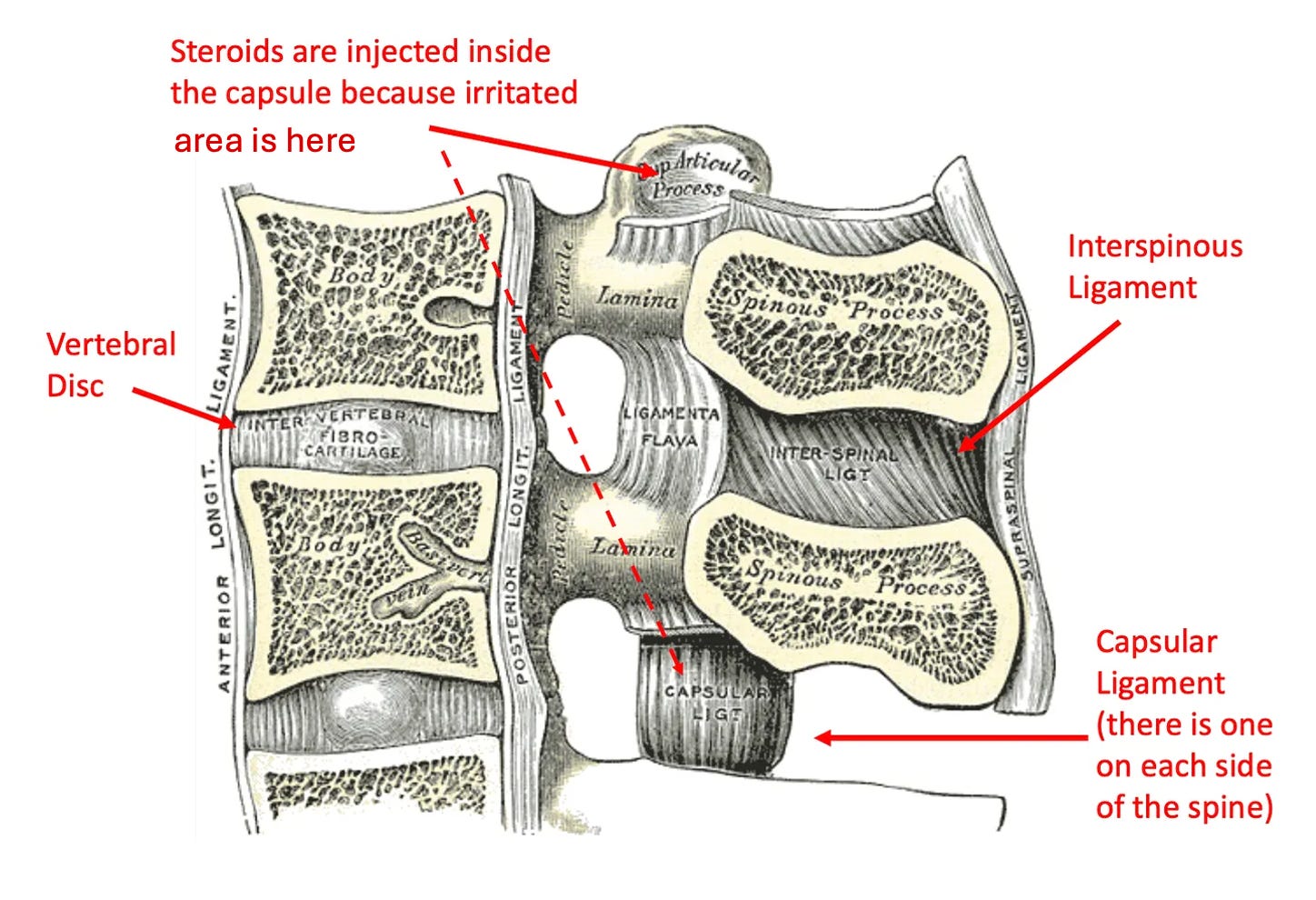
The major problem with this approach is that corticosteroids damage bone and ligaments, so in exchange for the temporary relief the steroid provides, the underlying irritation gets worse.
Note: most injected steroids are not water soluble and will persist in the injection site for a long time. An orthopedic colleague once showed me arthroscopic footage from inside a live joint where previously injected steroid could be seen coating it. Beyond that, steroids carry a remarkable systemic burden: at typical doses they cause a 5 to 15% loss of bone every year, roughly 70% of long-term users report weight gain, roughly half of oral users develop some degree of adrenal insufficiency, and one study found 90% of users reported adverse effects with 55% reporting at least one that was very bothersome. I have seen a patient develop avascular necrosis in both hips following a course of steroids.
Furthermore, in addition to the spine being destabilized, the discs depend upon the ligaments in the back of the spine (where steroids are injected) to prevent herniations and bulges. This is because when the spine bends backwards (e.g., because the ligaments in the back pull the vertebrae together) the discs are pushed forward, whereas when they bend forward, the discs are pushed backwards and against the nerve roots.
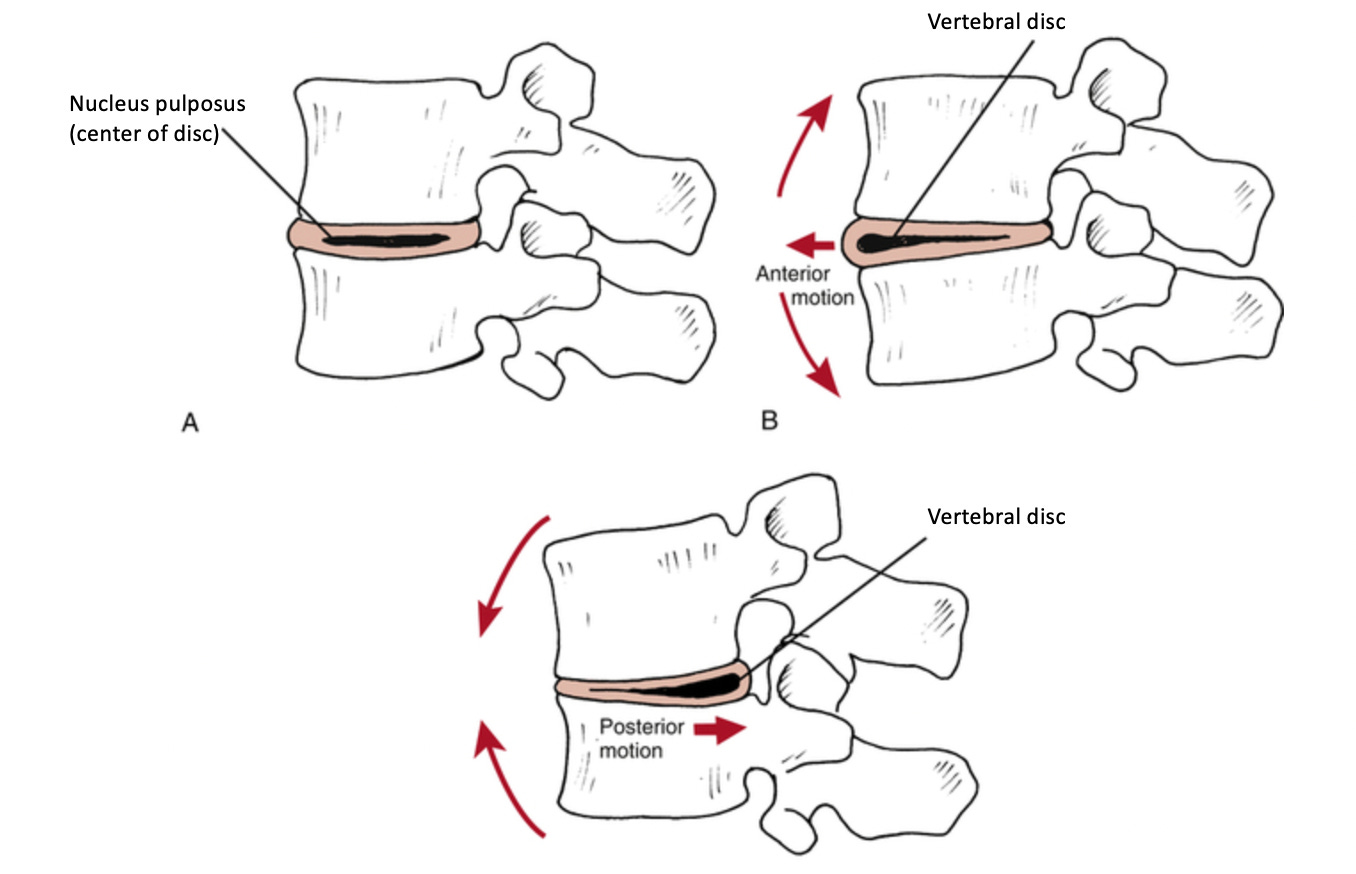
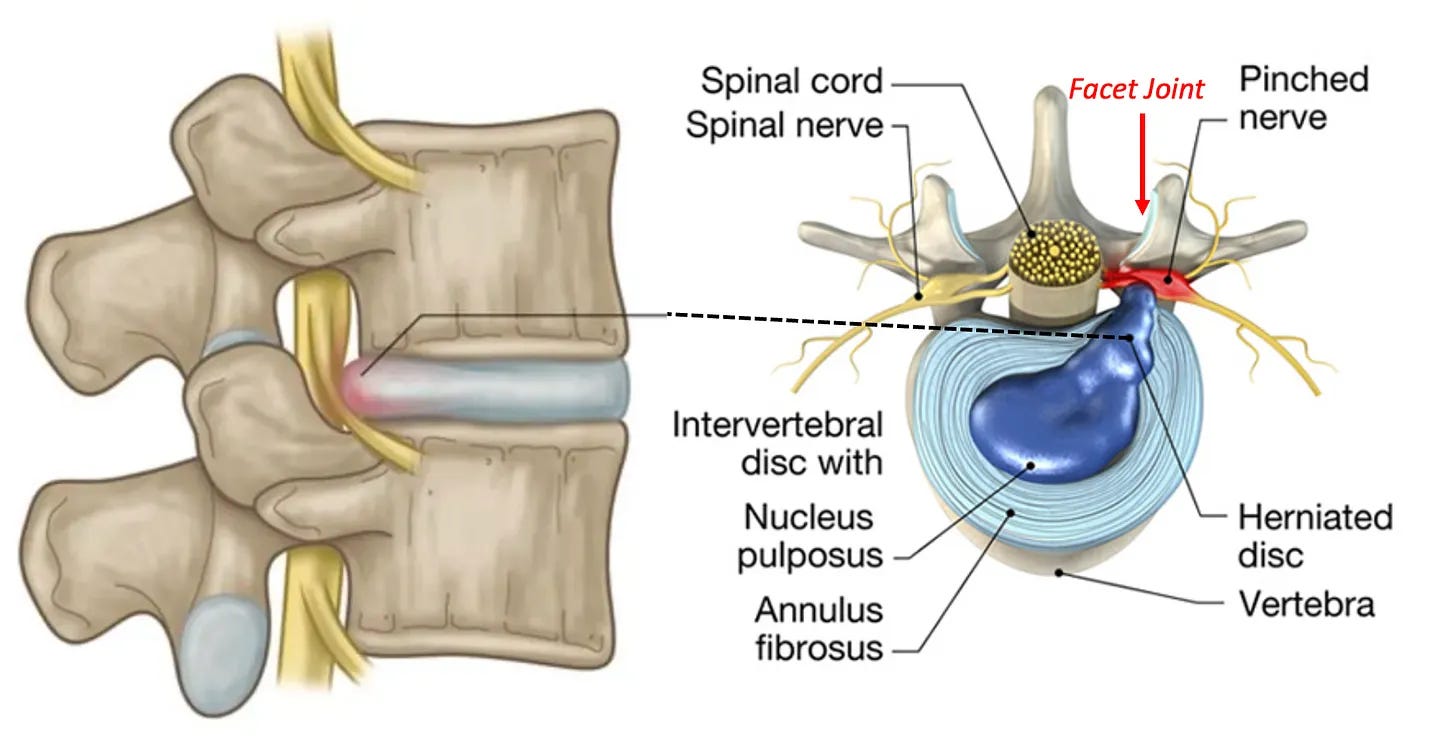
Note: as the ligaments play a key role in keeping the disc in place, when a bulging disc is suspected, we often focus on them. However, it can also be the case that the issue is not the disc, but rather that the existing ligamentous laxity is affecting and irritating a facet joint (which I believe is one reason why disc herniations observed on MRI can be a red herring).
Nerve ablations. A needle is placed into the nerve thought to be generating the pain and electricity is run through it to destroy the nerve. This works, but peripheral nerves regenerate, so it typically has to be repeated within a year.
Finally, when all of those approaches fail (and sometimes sooner), patients are referred to the culmination of this funnel—spinal surgery.
Spinal Surgeries
Various types of spinal surgeries exist. I would like to highlight three:
•Repairs of a fractured bone (which are necessary, have benefits which greatly outweigh their risks and are performed in a variety of different ways depending on the circumstances).
•Decompression surgeries (laminectomy, discectomy). These remove bone or disc material compressing a nerve and outside of the previously mentioned emergency repairs, offer the greatest benefit of any spinal surgery. In the lumbar spine they are frequently life-changing with minimal side effects. In the cervical spine they help most patients but carry more risk of complications. Existing evidence, in turn, supports them in patients who have both pain and clinical signs of nerve impingement and I have seen many people experience dramatic improvement from them.
•Spinal Fusions join vertebrae together with hardware (metal and screws), permanently eliminating motion at that segment. For as long as I can remember I’ve met people who had fusions which did not help them and caused a host of problems (as the body depends on the entire spine being able to freely move in a myriad of ways). Given that, I would hence like to briefly review the data on spinal fusions:
•In a Norwegian trial comparing instrumented lumbar fusion against cognitive intervention and exercises for chronic low back pain with disc degeneration, the nine-year outcome showed no difference between the two groups, one-third of the patients randomized to fusion had been re-operated, and when compared to the non-surgical group, the fusion patients were using more pain medication and were more likely to be out of work.
•The British MRC Spine Stabilisation Trial (349 patients) found no clear evidence that spinal fusion was more beneficial than intensive rehabilitation.
•Additionally, fusions are often added to decompression surgeries. A Swedish 2016 RCT (247 patients) found that two years out and five years out, there was no significant benefit from adding on the fusion. However, it did increase post-operative infections (from 4%-10%), post-operative hospital stays (from 4.1 to 7.4 days) and direct costs ($6,800 higher).
Why the Fusions Happen Anyway
Given all of that, you would expect fusions to be rare and shrinking. The opposite happened.
A 2010 JAMA analysis of Medicare claims examining surgery for lumbar spinal stenosis between 2002 and 2007 found that overall surgical rates declined slightly, but the rate of complex fusion procedures increased fifteen-fold, from 1.3 to 19.9 per 100,000 beneficiaries (with half of the recipients of those complex fusions having neither scoliosis nor spondylolisthesis—the structural indications that could justify adding the hardware in the first place). In parallel, life-threatening complications rose with surgical invasiveness, from 2.3% among patients having decompression alone to 5.6% among those having complex fusions, as did 30-day mortality (0.6% versus 0.3%) and hospital charges (being three times higher for the complex fusions).
Why?
Fusions are reimbursed dramatically more than decompressions, and they are reimbursed per level fused, which means there is a direct financial reward for fusing more of the spine than the pathology requires (despite more fusions creating greater subsequent impairment for the patients).
The Five Problems With Fusion
1. Adjacent segment disease: The spine continually transfers force through itself, so when a segment cannot move, the force disproportionately concentrates at the vertebrae immediately above and below the fusion. Those segments then wear out. Reported rates range from 5% to 27%, and the risk increases the longer patients are followed, with reoperation for it running at roughly 2.5% to 3.9% per year for traditional posterior approaches. That is a per-year rate, which compounds. A 45-year-old getting a fusion is signing up for decades of that arithmetic.
Note: any time a wave travels through a medium and the density of that medium changes, the wave refracts, with part reflecting, part being absorbed at the transition, and part continuing on. The spine’s alternating flexible (lumbar and cervical) and inflexible (thoracic) zones create these transition points, which is why the junctional areas before and after each part of the spine are the most common sites of musculoskeletal spinal pain. Fusing a segment creates an artificial and far more abrupt transition, and the tissue at the boundary absorbs the difference.
2. Pseudarthrosis (failed fusion): in 5–35% of cases the bones never solidly fuse, leading to ongoing pain, hardware loosening or breakage, and often more surgery (with the risk being higher in smokers, diabetics, and multi-level fusions).
3. Failed back syndrome: persistent pain after the operation is common enough to have its own name and its own ICD code. Failure rates range from 30% to 46% for lumbar fusion versus 19% to 25% for microdiscectomy, with increasing surgical complexity (e.g., vertebrae fused) increasing the likelihood of this.
4. Hardware issues: Defective and counterfeit screws, unapproved bone cement, and metallosis (a toxic reaction to the implant metals—most often cobalt, chromium or nickel which seep into the body and can cause symptoms weeks to years after the fusion). Most physicians have never heard of metallosis (despite it being acknowledged within the scientific literature1,2), but I have run into numerous patients who developed debilitating complications from it (and learned of a few cases which resulted in medically assisted dying because no one recognized what was causing the symptoms).
5. Irreversibility: Once a fusion is
bonded into bone and the adjacent segments rapidly begin compensating
for the abnormal spinal mechanics, revisions to the original surgery
become harder to perform, riskier, and much less likely to work than the
original surgery. One review reported that success rates drop to 30% after a second spine surgery, 15% after the third, and approximately 5% after the fourth, and that instrumented fusion performed to treat failed back surgery syndrome produced good outcomes in only 35% of patients
at 15 months, with 65% unsatisfactory. Likewise, regardless of how
compromised someone’s back is, a solution normally exists to resolve, or
at least improve their condition—but once a fusion is present, it
becomes much more difficult to (non-surgically) improve their symptoms,
with partial improvements typically being the best that can be achieved.
Note:
many patients report agonizing and debilitating complications after
spinal fusions. Additionally, I have observed a variety of more subtle
issues arise in the body mind and spirit following spinal fusions.
Much of this is synopsized by two large state workers’ compensation studies, which objectively tracked the results of these surgeries.
In Ohio, 725 lumbar fusion patients were compared to 725 randomly selected non-surgical controls with the same diagnoses. Two years out, 26% of the fusion patients had returned to work versus 67% of those who never had surgery, permanent disability was awarded to 11% versus 2%, and total days off work were 1,140 versus 316. Additionally, 27% required a reoperation, 36% had a complication, and daily opioid use increased 41% after the surgery, with 76% still taking them more than 90 days postoperatively. As the authors put it, "This procedure is offered to improve pain and function, yet objective outcomes showed increased permanent disability, poor RTW [return to work] status, and higher doses of opioids.”
In Washington State, among 1,950 injured workers who underwent lumbar fusion, 64% were still on work disability two years later, 22% had a reoperation, and 12% had a complication. That study also found adding cages or instrumentation increased complications without improving disability or reoperation rates at all — despite their use rising from 3.6% of fusions in 1996 to 58.1% in 2001.
The Business of Spinal Surgeries
Everything above describes incentives in the abstract. What follows is what happened at one hospital that deliberately built those incentives into its physicians’ contracts, and what happened to the doctors who objected.
In 2011, Providence Health & Services acquired Swedish Health, and with it Swedish’s Cherry Hill campus in Seattle, an institution with a growing reputation as a center for neuroscience research and treatment. Over the next few years, Providence and Swedish overhauled how Cherry Hill’s neuroscience program approached the business of medicine.
By 2015, the campus was generating half a billion dollars in net operating revenue, a 39% increase in three years, and had the highest Medicare reimbursements per inpatient visit of any hospital in the United States with at least 150 beds. Five of the six top-billing brain and spine surgeons in Washington State worked there, averaging $67 million in billed charges each.
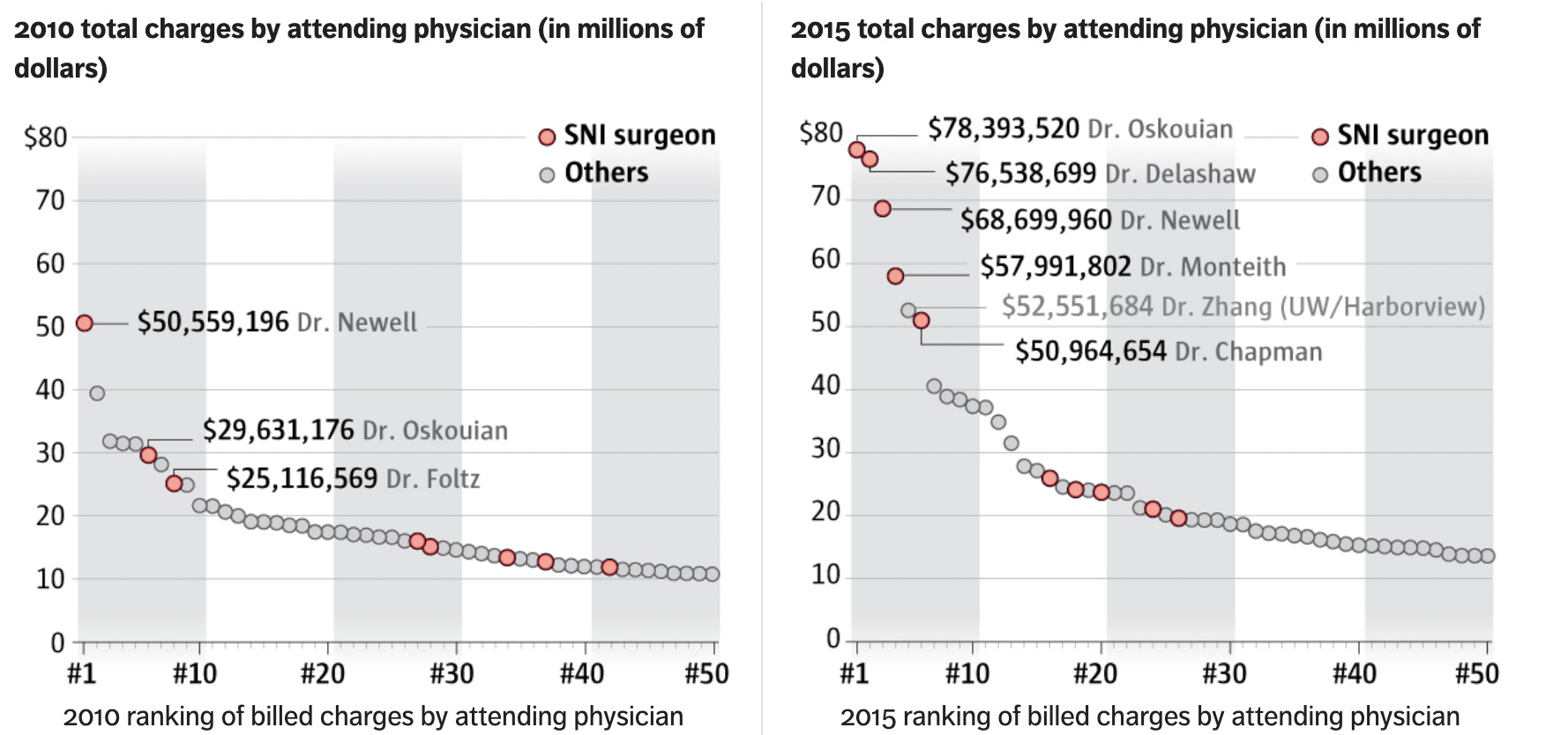
All of this was documented in a year-long Seattle Times investigation that reviewed more than 10,000 pages of records across four states and interviewed over 100 people, including more than 30 current and former Cherry Hill staff. The reporting was subsequently challenged in federal court and upheld in full, with the judge finding no evidence had been produced that any of it was false.
Note: my interest here is entirely in the institutional decisions, so I have deliberately left the individual physicians out of this account as I believe the events were ultimately a result of the system in place.
The Contract Change
The most consequential thing that happened at Cherry Hill was not a surgery. It was a change to how surgeons got paid.
Previously, the neuroscience institute’s surgeons pooled a portion of their pay and redistributed it among themselves. That system existed for a specific reason: it removed the financial penalty for handing a patient to a colleague who was a better fit for that particular case. If the patient would do better with someone else, you lost nothing by saying so. In some surgical settings all income is pooled this way, for exactly this reason.
Administrators ended the pooling. Surgeons would instead be paid almost entirely on their individual production, measured in Relative Value Units, the Medicare formula that assigns a point value to each procedure.
In other words, the mechanism specifically designed to prioritize patient fit over personal volume was removed, and replaced with one that rewarded doing more yourself.
And here is where this connects directly to everything I described earlier about fusions. The Times laid out the arithmetic:
-A spinal decompression at one vertebral level totals 15.37 RVUs.
-Adding a second level of decompression adds only 3.47 RVUs.
-But converting it to a fusion of two vertebrae totals 23.53 RVUs.
-Each additional vertebra fused adds 6.43 RVUs, and more can be added by using more hardware.
So decompressing two levels earns roughly 18.8 units. Fusing those same two levels earns 23.5, and every additional level fused adds nearly twice what a second level of decompression would have. This is the per-level financial incentive I described above, stated in actual numbers, inside an institution that had just made those numbers the basis of physician pay.
For scale: a typical neurosurgeon performs about 9,400 RVUs per year, according to the firm Swedish itself used to benchmark compensation. The two top producers at Cherry Hill each exceeded 27,000, and in 2014 earned roughly $2 million and $2.3 million respectively, according to Providence’s nonprofit tax filings. The national median for a neurosurgeon is about $772,000.
In 2014, those two surgeons ranked first in the state for lumbar fusions performed on patients whose primary diagnosis was lumbar stenosis without a displaced vertebra, with 24 such cases each. That is precisely the scenario in which, as Richard Deyo told the Times, the evidence does not support adding the fusion.
Note: an economist focused on health policy interviewed for the investigation put the general principle plainly, which is that there is evidence physicians respond to volume incentives by adding more procedures, including unnecessary ones, to a patient’s visit. The federal government has spent recent years trying to shift hospital reimbursement toward effectiveness rather than volume. Cherry Hill went the other direction on purpose.
What the Volume Required
Sustaining that output required practices staff found alarming enough to report.
Six current and former staffers described surgeons running multiple operating rooms simultaneously, with fellows handling portions of procedures while the attending was elsewhere. This is not prohibited, and Medicare permits it if the attending is present for the “critical” portions. But four staffers said the attending was sometimes in the room for less than fifteen minutes of a case, and several described the operating room pausing mid-surgery, with the patient open and under anesthesia, waiting for the attending to arrive.
Patients did not necessarily know this was the arrangement. The consent forms they signed included small print permitting the attending physician to use associates “to perform and/or assist with part or all of my procedure(s),” while the hospital’s advertising emphasized the personal involvement of its star surgeons, drawing patients from hundreds of miles away.
There was also a marked institutional shift toward more invasive procedures. In treating brain aneurysms, surgeons can either “coil” the aneurysm through a catheter threaded up from a small incision in the groin, or “clip” it by removing a section of the skull and working through the brain tissue (which provides more RVUs1,2). Coiling has grown in use because research indicates the less invasive option is often better for patients, and it avoids opening the skull.
At Cherry Hill, the clipping rate rose from 36% of cases in 2012 to 57% in 2014, while the statewide average stayed under 40%. Over roughly the same period, 9% of aneurysm patients treated at Cherry Hill had an ischemic stroke during their stay, versus 4% at every other hospital in the state. For clipping procedures specifically, the stroke rate was double the rest of the state, 14% versus 7%.
On the federal government’s patient safety indicators, Cherry Hill ranked below national levels in three areas: post-surgical blood clots, collapsed lungs, and serious complications. State data showed that among neuro and spine patients admitted electively, the rate who developed accidental cuts or other surgical problems climbed from 0.1% in 2011–2012 to 2.6% in 2015.
The strain reached the units where patients recover. A nurse who co-chaired Swedish’s staffing oversight committee described ICU patients who would normally receive one-on-one care being watched by nurses handling a second patient, charge nurses forced to take patients on top of administrative duties, and patients lingering in post-op for hours because there was no ICU capacity. She said it was not uncommon for some operating room nurses to work twenty hours in a twenty-four hour period, and noted a loophole in Washington’s nurse overtime law that allowed it.
“If the caregivers are completely spent, they’re not going to be able to take care of you.”
What the Doctors Did About It
This is the part that matters most, and the part I want to sit with.
The physicians at Cherry Hill were not silent. They escalated, in writing, repeatedly, to the top of the organization, for years.
When administrators moved to appoint new leadership for the neuroscience institute from within rather than conducting a national search, one of the surgeons at the meeting suggested they take a vote on how to proceed. According to four people present, the chief executive of Providence, a physician himself overseeing fifty hospitals across seven states, ended the discussion:
“This is not a democracy.”
The head of Swedish’s own internal committee on surgical quality resigned in protest over the appointment, writing to Swedish and Providence leadership that he could not do the job while administrators promoted someone who “has shown very little respect for the Culture of Safety and related processes,” and that the “number of negative reports submitted by so many different individuals is, in my judgment, a serious indicator of deficiencies.”
Administrators proceeded with the appointment, and then revised the surgical contracts described above to further incentivize the high-volume approach.
Within sixteen months, staff had filed 49 internal complaints concerning quality of patient care and professional conduct.
One neurosurgeon wrote to the Swedish CEO that “this toxic, repressive environment has already negatively impacted the ability of the SNI community to provide the quality care (to) our patients that they deserve,” and that fundamental issues including “patient safety, appropriate surgery, and quality of care have been rebuffed by the leadership.”
An internal memo cited these problems as a reason more than 60 staff members had left in two years.
Then, in November 2016, the chief executive of physicians at Swedish wrote directly to the chief executive of Providence. He reported that the neurosurgeons felt intimidated about raising what they considered unsafe practices at the morbidity and mortality conference, the standard forum where physicians review bad outcomes specifically so they are not repeated. He said he had heard of decisions that led to significant patient harm and death. And then he said this:
“It has created a perception that what really matters at Swedish is vast RVU production without concern for the means by which it is achieved.”
The month before, ten surgeons and staff members had met in person with the Swedish CEO and two other administrators to make the same case. The minutes show they warned that a reporter was calling staff, and that everything which had been ignored was about to become public.
Nothing changed until the investigation was published.
That is the whole story in one sequence. The quality committee chair resigned. Forty-nine complaints were filed in sixteen months. Sixty staff left. The chief executive of physicians put it in writing to the CEO of a fifty-hospital system that the institution appeared to value production over the means by which it was achieved. Ten surgeons made a direct plea in person.
And the answer was no, because the model was working financially.
An anonymous whistleblower did reach the state Department of Health in early 2016, outlining inappropriate surgeries, rising complications and infection rates, unsupervised fellows, and ignored complaints. After a two-day investigation, the investigator concluded the allegations were “not substantiated due to lack of evidence.”
What This Cost
I want to close with one patient, because the numbers above are easy to read past.
Talia Goldenberg was 23, an artist, a former gymnast and pole vaulter, with Ehlers-Danlos syndrome, a connective tissue disorder causing unstable joints and chronic pain. It was not going to kill her. But her flexible cervical spine meant even a vigorous laugh could jostle her neck and trigger debilitating headaches, and she was told a cervical fusion could improve her life.
Note: EDS in fact responds very well to certain treatments like nutritional supplementation, but it is typically mismanaged and worsened by the increasingly invasive treatments it receives.
She traveled from Oregon with her parents in February 2014. Her father was a family physician. The surgery lasted four and a half hours and was declared a success, with no complications, described to her parents as “perfect.”
As the anesthesia wore off, her jaw was jutting forward and would not open wide enough to admit a finger. Her face was swollen. Her voice came out as a rasp. She told the nurse she was having difficulty breathing, then vomited twice.
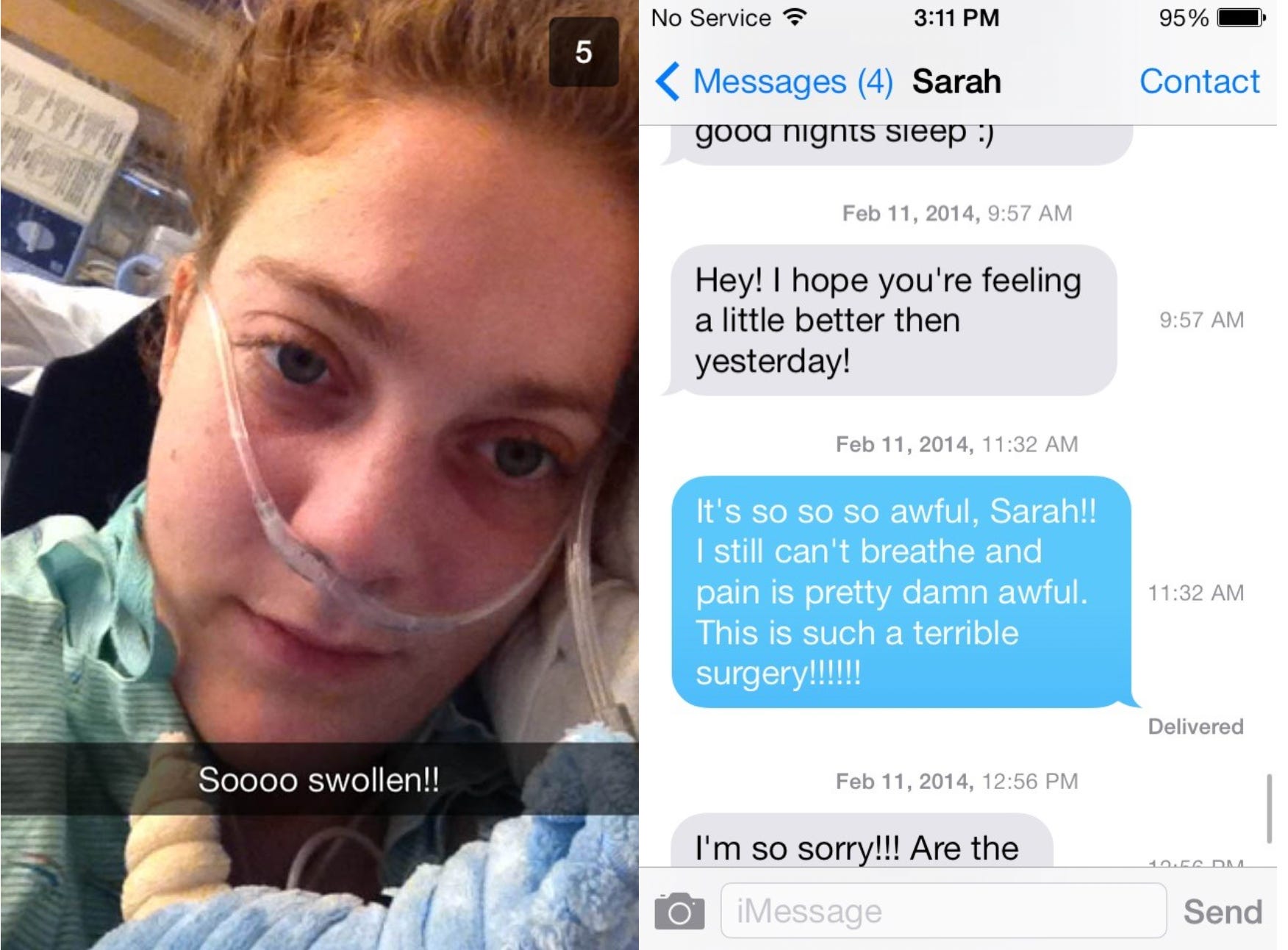
Her father understood immediately what that combination meant. If her airway closed, intubation requires tipping the head back, which her newly fused neck would not permit, and passing a tube through the mouth, which her locked jaw would not permit. The only remaining option would be a cricothyrotomy, cutting an emergency airway through the front of the throat. He told the staff, repeatedly, that they needed a crike kit and a plan.
Over the following hours a nurse paged the attending about her medications and received no response, then paged the physician assistant, then paged again asking for a doctor to come as soon as possible, then paged the neurosurgical fellow, then called a Rapid Response team instead. Talia was moved to the ICU.
The next morning she texted her friend: “My throat is nearly swollen closed.” She texted her cousin: “Yeah feel like my throat is literally barely open. Can’t even talk well or swallow!” At 11:56 she texted: “Still having a very, very hard time breathing and feel like the docs aren’t quite takin it seriously.”
A note filed by the surgical team that morning recorded “subjective mild difficulty breathing,” attributed it to the tube used during surgery, observed that she sounded hoarse but did not appear to be in distress, and said she was ready to transfer out of intensive care.
At 1:26 p.m. Talia coughed, looked at her parents, and forced out: “I can’t breathe! Help me! I can’t breathe!”
Staff tried to force airway devices past her clenched teeth, switching sizes, shoving and twisting and levering to try to pry her jaw open. It did not work. Her father pleaded for the cricothyrotomy and paced the bedside watching her color turn gray. Her mother stood at the foot of the bed holding her daughter’s foot.
Someone asked whether any of it was getting air in.
“No!” the respiratory practitioner answered. “Maybe randomly.”
About fifteen minutes after Talia’s last breath, a doctor entered the room, assessed it, and called for the crike kit.
None was in the room.
She went into cardiac arrest roughly twenty minutes after asking for help. Staff performed CPR, retrieved the kit, and did the cricothyrotomy. Her heartbeat returned. She never regained consciousness, and died nine days later after her parents made the decision to withdraw support.
Swedish’s autopsy could not determine why she had suddenly been unable to breathe. Her parents still do not know.
A week after her death, a letter arrived at their home addressed to Talia, asking her to complete a survey about her stay. “By sharing your thoughts and feelings, you can help us improve the care we provide.”
Her father has not practiced medicine since.
What Happens in Countries That Can’t Afford This
In studying the history of the forgotten side of medicine, you will inevitably discover that many of the most revolutionary discoveries originated in America—but beginning in the 1950s they gradually stopped appearing here. This, I believe was a result of the American Medical Association (discussed here) and then the FDA (discussed here) not only suppressing each low-cost discovery which threatened the medical monopoly but also intimidating scientists who researched “unapproved” therapies (culminating in Fauci cutting off research grants to undesirable researchers).
Because of this, we have a system of medicine which neglects affordable and unpatentable solutions to monetizable diseases, costs more and more each year and frequently fails to address the ailments patients suffer from.
However, in places where there is not enough available wealth to sustain a medical monopoly, many of those solutions are actively explored. For instance, in Russia and Eastern Europe, there is an extensive body of evidence showing DMSO can treat a wide range of back issues:
•A placebo-controlled trial in 68 patients with acute, subacute and chronic vertebrogenic dorsalgia found topical DMSO gel (twice daily for ten days) significantly outperformed placebo across every measure: mean pain on VAS fell from 7.46 to 2.58 versus 7.13 to 4.73 for placebo, the muscle syndrome index shifted to mild severity in 76.3% versus 33.3%, spinal mobility restriction fully resolved in 39% versus 27% (with 20% of the placebo group remaining severe versus 0% of the DMSO group), and Roland-Morris disability scores improved 60% versus 35%.
•A 1968 controlled trial in 38 patients with lumbar and cervical disc herniation found treatment duration in the DMSO group was roughly halved compared to controls.
•In a staged rehabilitation program across 320 patients with vertebrogenic pain syndrome, topical DMSO on the painful segment reduced pain to 0–2 points on VAS in 89% versus 73% in controls, with long-term remission maintained in 80% when repeated annually.
•Across four studies from the same research group spanning 2005 to 2018, with 64 to 147 patients each, DMSO with procaine applied as compresses to painful myotonic points on the neck or shoulder for 1.5 to 2 hours per session over 10 to 15 procedures succeeded in 68.8% to 84.4% of patients with cervical radiculopathy and myelopathy, with improvements in pain, sensation, strength, cervical mobility and EMG parameters.
•For cervical osteochondrosis with pronounced neuralgic syndromes, a DMSO mixture applied for 40 to 45 minutes every other day over 20 to 22 days produced analgesia from the first application, eliminated spontaneous pain within 3 to 4 procedures in patients with reflex syndromes, and over two years dropped total disability days roughly 4.7-fold, from 481 to 104.
•In a comparison of DMSO-mud applications against mud alone for cervical osteochondrosis, clinical improvement occurred in 100% of the DMSO group after only 5 to 6 procedures versus 50% in the mud-only group after 10, with hand dynamometry (grip strength) in one case improving from 20 kg to 53 kg.
Likewise Karipain (a papaya-derived proteolytic preparation containing papain, chymopapain, proteinase and lysozyme) is delivered into herniated discs via iontophoresis, with DMSO added as the penetration enhancer. Across well over a dozen studies (detailed here) this protocol has been reported to reduce hernia size by 2 to 7 mm on MRI (and volume by up to 52%) in 75% to 98% of patients, avoid surgery in approximately 45%, and produce improvements of 54–72% on the McGill Pain Questionnaire, 33–54% on Oswestry, 58–76% on Roland-Morris, and 29–66% on VAS. In the largest single series, 221 patients with cervical and lumbar herniations showed significant reduction in hernia dimensions on spiral CT in 98.2% after two courses. Enzyme therapy combined with DMSO-enhanced delivery was used in over 8,500 patients across Armenian medical institutions.
Finally, DMSO applications appear as a standard component in Russian, Ukrainian and Uzbek clinical guidelines and treatment protocols for back pain, is in national guidelines for radiculitis and sciatica and is used at military rehabilitation sanatoriums as part of standardized 21-day courses—yet almost no one in American medicine has heard of any of it.
What Readers Have Reported
At this point I have received thousands of reports from readers using DMSO for pain, and my best estimate is that between 80 and 90% of people who try it for pain notice a meaningful improvement (which matches what the early DMSO researchers observed). Spinal pain is the most common pain condition readers here write to me about, and across the hundreds of reports I’ve reviewed, pain relief was typically in the 60–100% range (happening anywhere from within minutes to weeks in certain long lasting cases), many people were able to reduce or eliminate NSAIDs, opioids, or other pain medications and a striking number describe it working after years or decades of failed conventional treatment—including many individuals suffering from the complications of spinal fusions.
Acute Back Injuries
Readers have consistently reported rapid pain relief from acute back injuries, often within minutes. A welder with 10 years of work-related back pain was pain-free 20 minutes after a single DMSO application,1 and similar rapid responses were reported after car accidents,1,2,3 falls,1,2,3 sports injuries,1,2 and lifting injuries,1 with pain relief typically occurring within minutes to hours and often persisting without need for reapplication.1,2,3 One reader was “in agony” and “a hobbling cripple” after a tennis fall until DMSO restored 90% of pain relief and movement within one minute.1 A Navy EOD trainee in 1980 who severely bruised his tailbone in a ski accident was able to fully resume training after two days of DMSO use.1 Multiple readers also reported rapid relief from tailbone injuries (fractured or bruised coccyx), typically reducing pain from “searing” to manageable within days to weeks1,2,3,4,5,6,7,8,9,10 along with another who said it “changed my life” after a spinal fracture.1
Chronic Back Pain
A
large number of readers with chronic back pain (ranging from years to
decades) reported significant or complete relief from topical DMSO. 1,2,3,4,5,6,7,8,9,10,11,12,13,14,15,16,17,18,19,20,21,22,23,24,25,26,27,28,29,30,31,32,33,34,35,36,37,38,39,40,41,42,43,44,45,46,47,48,49,50,51,52,53,54,55,56,57,58,59,60,61,62,63,64,65,66,67,68,69,70,71,72,73
A
few consistent patterns stood out: pain relief was typically 60–100%,
onset ranged from minutes to weeks (with longer-standing conditions
taking longer), and many were able to reduce or eliminate NSAIDs,1,2,3,4 opioids,1,2,3,4
or other pain medications. One reader with severe chronic back pain
described DMSO as the only substance in their life that “beat the too
good to be true rule”1 and a physician with 26 years of practice and chronic lower back pain called it “a game changer,”1
One particularly detailed account described a reader with 30 years of “severe disc degeneration L1-S1” who applied DMSO once to the lower back: “It worked immediately and I haven’t had to use it for my back again. That was about 60+ days ago.”1 Another reader with severe chronic spinal pain soaked their entire back in a DMSO-mineral solution for six hours (far exceeding recommended contact time). “Unbelievably, 7 pitch black lumps rose to the surface and formed eschar scabs which finally came off about 4 weeks later.” After these masses were expelled, “my back felt fantastic and I felt 20 years younger,” though subsequently “it felt like something was moving up and down my spine in the fluid.”1
Post-Surgical Back Pain
Pain which persists after spinal surgeries, particularly after spinal fusions, is sadly quite common, termed “failed back syndrome” (or sometimes ‘failed neck syndrome’), and notoriously difficult to treat. However, readers who had this after spinal surgery including fusions, laminectomies, and multiple revision surgeries frequently reported significant relief from DMSO.1,2,3,4,5,6,7,8,9,10,11,12,13,14,15
One reader with over 50 surgeries and a thoracic spinal cord injury (who was also allergic to opioids) called DMSO “life changing,”1 while another after 23 spinal operations reported a 50% reduction in medications within weeks.1 Another with a spinal cord injury and two ACDF (cervical fusion) surgeries said DMSO was “the only product that worked on nerve pain or rigidity.”1 A reader whose wife had nerve shocks in her toes following a poorly executed spinal fusion found that nightly DMSO application to the spine adjacent to the fusion incision “immediately had less severe and less frequent toe shocks” and she no longer needed to charge her back nerve stimulator.1 Another with hardware in the back from fusion surgery gets “a DMSO back rub every day, and it helps,”1 while a reader with Morvan’s disease following viral encephalitis (who had undergone cervical fusion among multiple surgeries) reported 75% pain reduction and visible inflammation decrease after two weeks of topical DMSO.1
A reader whose severe neck and shoulder spasms began 11 years after a cervical discectomy and fusion — and had failed both PT and injections — found DMSO “helped within minutes,” and eventually stopped needing it entirely except during flares.1 Others with fusions at various levels have also reported reduced pain and improved function.1,2,3,4,5
Scar Tissue and Adhesions
Multiple readers reported DMSO softening and reducing surgical scars on the spine, with one noting that a scar on the back of the neck (operated on three times over 30 years) “softened and untwisted” and the spine came back into alignment.1 Others reported scar tissue pain from back surgeries diminishing with regular use.1,2,3
Neck Pain and Stiffness
Topical DMSO applied to the neck produced rapid improvements across a wide range of cervical conditions. Readers consistently reported pain reduction of 80–100%,1,2,3,4,5,6 often within minutes,1,2,3,4 with many noting restored range of motion they had not had for years.1,2,3,4,5,6 A 55-year-old whose neck pain had persisted since a car wreck at age 19 (and did not respond to surgery) was “100% pain free in 1.5 hours” after a family physician applied DMSO gel.1 A 78-year-old with five rear-end car accidents over decades, spinal stenosis, and bone spurs started oral DMSO two years ago and now walks three miles daily with only occasional shoulder pain remaining.1
Neck mobility improvements were particularly striking. One reader’s neck rotation “increased 30 degrees each way in the first week,” causing them to almost cry while driving upon realizing the change.1 After an electric scooter crash producing a severe trapezius/whiplash injury, another reader endured two weeks of excruciating pain and only two hours of sleep per night despite multiple treatments until a morning application of oral and topical DMSO eliminated the pain within 15 minutes1 (similar significant scooter injuries in other readers also resolved, including one 20 years after the original accident1,2 as did other whiplash injuries1,2).
Additional readers reported relief from chronic neck pain,1,2,3,4,5,6,7,8,9,10,11,12,13,14,15,16,17,18,19,20,21,22,23,24,25,26,27,28,29,30,31,32,33,34,35,36,37,38,39,40,41,42 with several noting improved sleep1,2 and reduced medication use.1
Cervical Disc and Vertebral Conditions
Readers with diagnosed cervical disc degeneration, herniations, and stenosis reported significant improvements. Multiple readers with conditions at specific vertebral levels (C3-C4, C4-C5, C5-C6, C5-C7) reported 80–90% pain reduction, often within minutes of application, with continued improvement over weeks to months of use.1,2,3,4,5,6,7,8,9,10
Additional reports of cervical condition improvements include cervical spondylitis or spondylosis,1,2,3,4,5,6,7,8,9 cervical arthritis,1,2 and post-neck-surgery pain.1,2,3,4,5,6
Spinal Stenosis and Spondylolisthesis
Readers with diagnosed spinal stenosis reported significant improvements. One reader with moderate to severe cervical stenosis (worst at C3-C5, with additional lumbar and thoracic involvement) that had required hospitalization reported “life-changing” improvements and full range of neck motion after DMSO.1
One with “severe spinal stenosis and a slipped disk” who was not a candidate for surgery and had no relief from pain injections described DMSO as giving them “my life back.”1 Another with stenosis and spondylolisthesis who had discontinued opioids after a decade found topical DMSO “kept me moving” with rare need for NSAIDs.1 A 75-year-old with grade 1 spondylolisthesis and severe spinal stenosis at L4-L5 reported DMSO “reduces, even removes the pain for a few hours” and combined with other therapies made them “noticeably more functional,”1 while another with 20% forward slippage of L4 over L5 found DMSO “reduced my perceptions of pain considerably”1 (and noted an unexpected side effect of transient erections from larger doses, which they attributed to improved pelvic blood flow—something numerous other readers here have also reported alongside prostate improvements). A reader with grade 3 spondylolisthesis at L5-S1 (with bulging discs, nerve compression, and stenosis at levels above, making fusion inadvisable) who had discontinued epidural steroids after they damaged bone density reported DMSO was “the only thing that works,” producing entirely pain-free days after years of unrelenting chronic pain.1 Others with foraminal stenosis,1 stenoses at various levels1,2 and spondylolisthesis at various levels1,2 also reported pain relief. One reader with a similar L4-over-L5 slippage (triggered by a decades-old motorcycle injury) causing six years of daily pain found topical DMSO largely eliminated his back pain.1
Disc Herniation Reports
Reader reports of DMSO treating disc herniations are amongst the most dramatic I’ve received. Most remarkably, a reader whose 12.5 mm bulging disc had left them unable to stand without crying reported that after seven days of DMSO use, they could stand, and after seven months, imaging showed the disc had shrunk to 3–4 mm without surgery.1,2 A reader with a herniated L5-S1 disc who had been confined to bed for seven months and unable to stand reported being able to stand and return to physiotherapy within six weeks of oral DMSO.1 One with symptoms heading toward cauda equina syndrome (from multiple disc compressions—making it urgent to address immediately) declined surgery and found relief through spine decompression therapy combined with topical DMSO and THC cream.⬖1
Other readers with confirmed disc herniations reported similar patterns: pain elimination within days to weeks,1,2,3,4,5,6,7,8,9,10,11,12 reduced need for epidural injections,1 healing slipped disc with castor oil,1 and functional recovery sufficient to return to work and normal activities.1,2,3,4 One reader avoided a planned back fusion surgery entirely, noting their surgeon “had 0 curiosity” when told why.1
Readers with degenerative disc disease similarly reported significant relief,1,2,3,4,5,6,7,8,9,10,11,12,13,14,15,16,17,18,19,20,21,22,23,24,25 with several noting DMSO was the first treatment to provide meaningful improvement after years of failed therapies, and one reader whose wife’s 50-year-old disc injury (sky diving accident) had been considered untreatable finding that topical DMSO (combined with other therapies), to her doctor’s astonishment, appeared to be healing the disc.1
Ankylosing Spondylitis
Multiple readers with ankylosing spondylitis reported dramatic improvements from DMSO. Two readers with 23+ year histories of AS (one with 29 fractures from prescription drug complications) reported being off all medications and thriving, with one no longer needing daily DMSO.1,2,3 A reader who started topical DMSO on their knees for AS found that within an hour “I could feel a difference” and could walk stairs normally for the first time in years; after two months, their CRP inflammatory marker dropped from a chronic 9–12 to 3 (near remission levels), with DMSO being the only change made.1 One reader reported “literally ZERO lumbar pain” after one week.1 Others with AS or autoimmune spondylitis reported significant pain and inflammation reduction.1,2
Treating Spinal Pain
Back pain has many different causes (e.g., tight muscles, weakened ligaments, impaired circulation, inflammation and edema compressing a nerve root, a bulging disc, scar tissue, a hypersensitized neural circuit). Each requires a different treatment, and the reason the conventional ladder fails so reliably is that it applies the same standardized sequence regardless of which one is actually present and then often defaults to pain killers which do nothing for the underlying cause of the illness.
DMSO succeeds precisely because it addresses many of these causes so it will often be applicable to the cause of the individual’s pain when utilized rather than being stuck focusing on a single molecular target like most pharmaceutical drugs.
However, that same non-specificity is also its ceiling. When DMSO produces a partial response rather than a complete one — the backaches resolve but the nerve pain persists, or the pain improves but the mobility does not — it almost always means one particular cause is dominant and needs something aimed directly at it.
In the remainder of this article, which as always doubles as an open forum for whatever questions have accumulated over the past month, I will cover:
•The specific DMSO protocols for spinal pain, drawn from both the Russian clinical literature and what readers here have worked out on their own, including concentrations, application sites, and what to combine it with.
•Why applying DMSO to the site of pain is frequently not enough, and how to reason out where it actually needs to go (along with how to dose and procure it).
•How we address the muscular, and ligamentous components of back pain (which are typically our primary approach), including in hypermobile patients.
•Methods we have found helpful for disc herniations.
•Simple at-home approaches which are often extremely helpful for neck and back pain.
L e reste de l' article peut être lu gratuitement à condition de charger l'appli substack ( https://substack.com/app/app-store-redirect ) ; ce que je ne fais pas


Commentaires
Enregistrer un commentaire