LA SITUATION CRITIQUE D'ISRAËL EN MATIÈRE DE CARBURANT
https://sonar21.com/israels-critical-fuel-exposure/
ISRAEL’S CRITICAL FUEL EXPOSURE
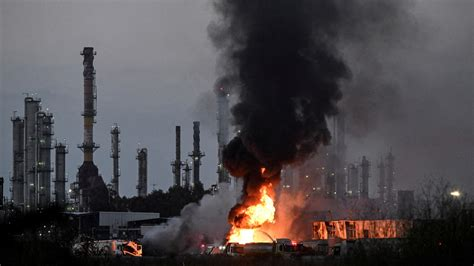
What’s going on with the Israeli hardliners? Following a security cabinet meeting chaired by Prime Minister Benjamin Netanyahu, Smotrich said:
The current situation, in which the conflict between Iran and the United States remains limited, is the right one and the best for us. We are not looking to get involved.
He elaborated that Israel’s ultimate goal is to weaken and ultimately overthrow the Iranian regime, and that economic pressure (citing Iran’s high inflation and currency collapse) is currently the most effective path. He argued the limited US-Iran confrontation, including pressure related to the Strait of Hormuz, benefits Israel without requiring direct Israeli military involvement.
But is he telling the truth? There may be another reason that Israel, despite some belligerent threats from Netanyahu, wants to avoid getting more involved in the war with Iran. I believe the answer may lie in an assessment I received the other day from a friend who is an energy expert and is an active consultant working with countries in the Middle East. Here are the key conclusions:
CORE JUDGMENT: Israel’s military posture is critically fuel-dependent. Air power is central to homeland defense, strategic reach and any protracted conflict involving Iran, Lebanon, Yemen or multiple fronts. The domestic middle-distillate system is concentrated in two refineries, with the larger Haifa complex still structurally impaired. Loss of both refineries would remove approximately 104 kb/d of diesel and jet/kerosene output. No assured external system can replace the resulting 88 kb/d sustained-war requirement at the necessary scale and speed. If import reception also fails, Israel enters a finite inventory clock that progressively compresses sortie generation, ground logistics, air defense, backup power and the wider military support system.
Executive Summary: Four Critical Deficiencies
- NATIONAL REFINING CONCENTRATION. Israel has no geographically diversified domestic refining system. Two facilities carry effectively the entire national burden. The current planning baseline is approximately 82.3 kb/d of diesel and 22.0 kb/d of jet/kerosene; Haifa supplies about two-thirds of combined middle distillates and roughly 70% of diesel. Loss of Haifa alone creates a 52 kb/d sustained-case deficit. Loss of both eliminates domestic supply.
- EXISTING STRUCTURAL IMPAIRMENT. Haifa is operating, but it is not a fully resilient asset. Its
dependence on interconnected power, steam, electrical, pipeline and transfer systems leaves the complex exposed to common-mode failure. The strategic danger is not merely reduced nameplate capacity; it is that further functional disruption could propagate across multiple processing and support systems at once.- NO ASSURED REPLACEMENT SYSTEM. With both refineries unavailable, approximately 88 kb/d of middle distillates must come from accessible stocks and imports under the sustained-war case. Black Sea supply is sharply constrained, global jet and diesel trade is compressed, Gulf refining availability is impaired, and every imported barrel remains dependent on insurance, shipping, reception, certification and internal distribution. Israel has procurement options, but no assured backup architecture capable of replacing its refining system at scale.
- MILITARY POSTURE IS COUPLED TO MIDDLE DISTILLATES. Israel’s air force is central to deterrence, homeland defense, long-range reach and any protracted multi-front conflict. Jet fuel sustains aircraft; diesel sustains the system that makes airpower possible – air defense, ground mobility, logistics, communications, backup generation, maintenance and base continuity. A fuel crisis therefore degrades the entire military posture, not aviation in isolation.
Let me boil this down for you. During the first five weeks of Epic Fury Israel’s refineries in Haifa and Ashdod were hit and suffered significant damage. Those two refineries are essential for Israel’s ability to produce diesel and jet fuel. At present Israel is scraping by, but it does not have substantial reserves. Further damage to those refineries would create a fuel crisis for Israel, especially in terms of its ability to produce jet fuel. Without jet fuel, Israel’s ability to continue bombing Lebanon and Gaza would be severely constrained, if not eliminated. A lack of diesel would also cripple Israel’s ground operations. In short, renewed Iranian attacks on Israel’s refineries could leave Israel unable to continue military operations.
What do you think?
Several podcasts to cover. First up is my conversation with Steve Yang of Natural Resources Stocks:
https://www.youtube.com/watch?v=stFmAF2IS2M

Danny Davis and I discussed Trump’s threats to hit Iranian civilian targets and we also discussed some of the latest developments in the Ukraine war:https://www.youtube.com/watch?v=g8-SsZuIxcw

Pepe and I are back on Transition Protocol with Dr. Z providing our latest assessment of the diplomatic maneuvers to end the war with Iran:
https://www.youtube.com/watch?v=FV1WrPg6140
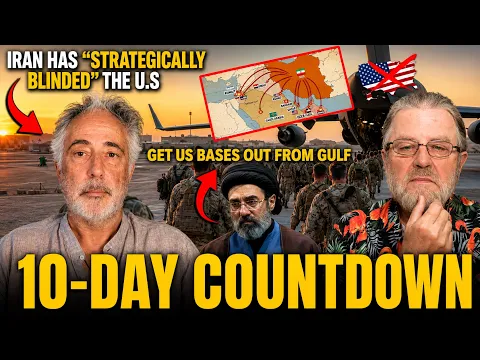
Colonel Wilkerson and I were hosted by Danny Haiphong and we analyzed the effectiveness of Iran’s missile strikes:
https://www.youtube.com/watch?v=N0zGvKkeAsg&t=4s
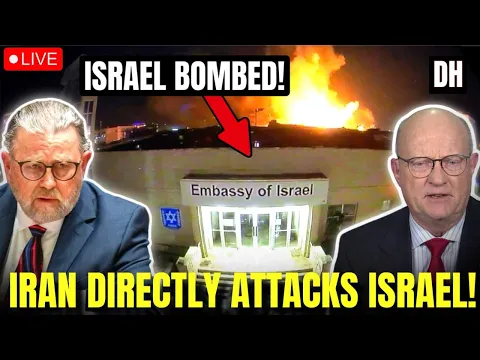
Nima and I discussed the likelihood of Trump bombing Pickaxe Mountain:
https://www.youtube.com/watch?v=IzWqomZy-As
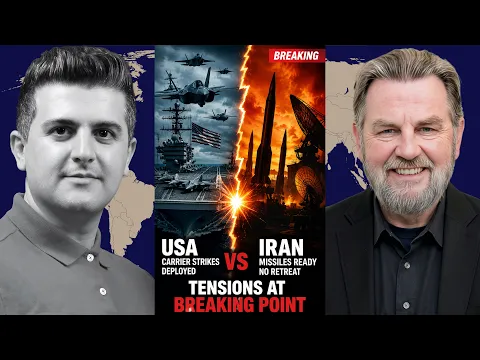
Mario is growing more concerned with each passing day about the trajectory of this war:
https://www.youtube.com/watch?v=8WVUB0u6Lo8&t=37s

Sulaiman was obsessed with old news about the destruction of the CIA Station in Riyadh:https://www.youtube.com/watch?v=RPpWrCPxLcM
My chats with Foad Debate are always enlightening:
https://www.youtube.com/watch?v=hSnFMTjaPHA



Commentaires
Enregistrer un commentaire